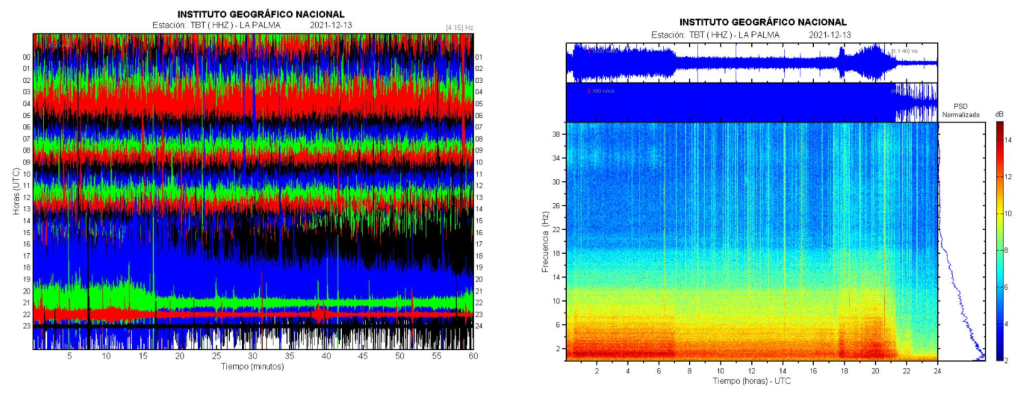
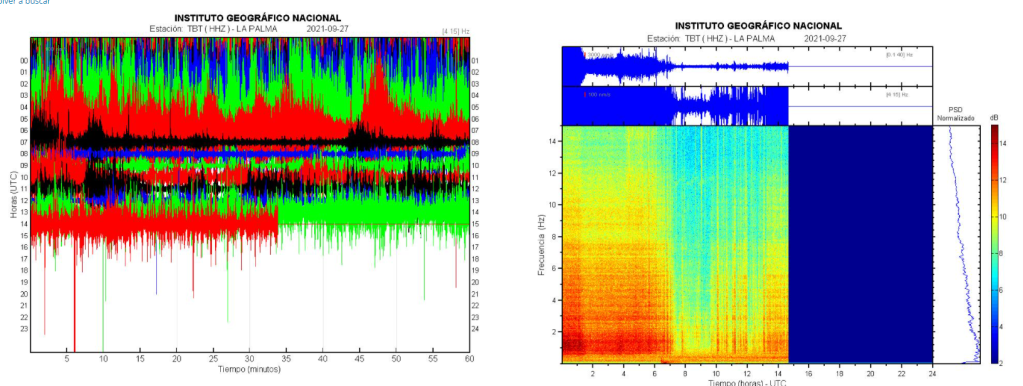
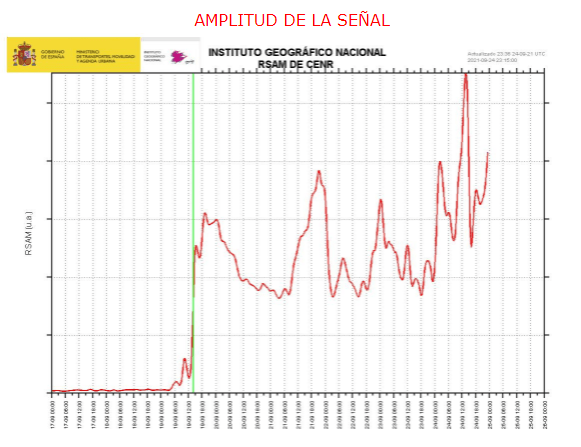
There was some good news for La Palma over the week end; the eruption was declared over on 25 December 2021. The eruption, itself, ended on 13 December 2021 at 22:21. There was a precautionary period of waiting before announcing the end of the eruption.
This is an important milestone in the process to recover and rebuild.
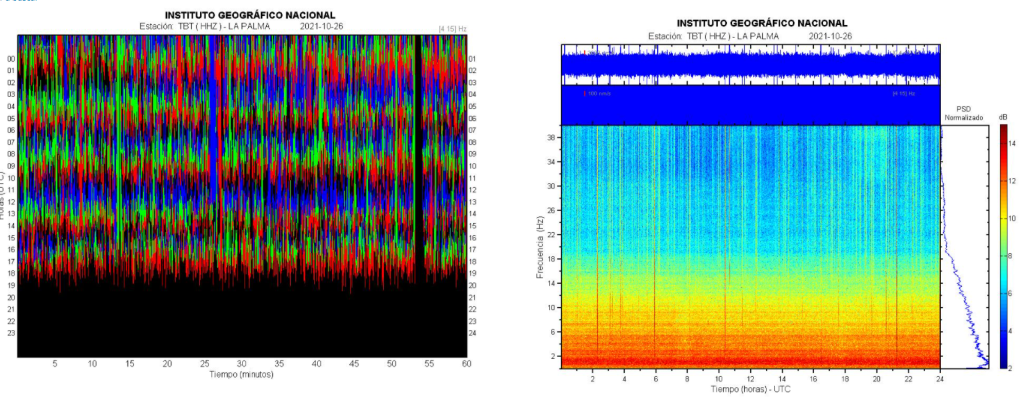
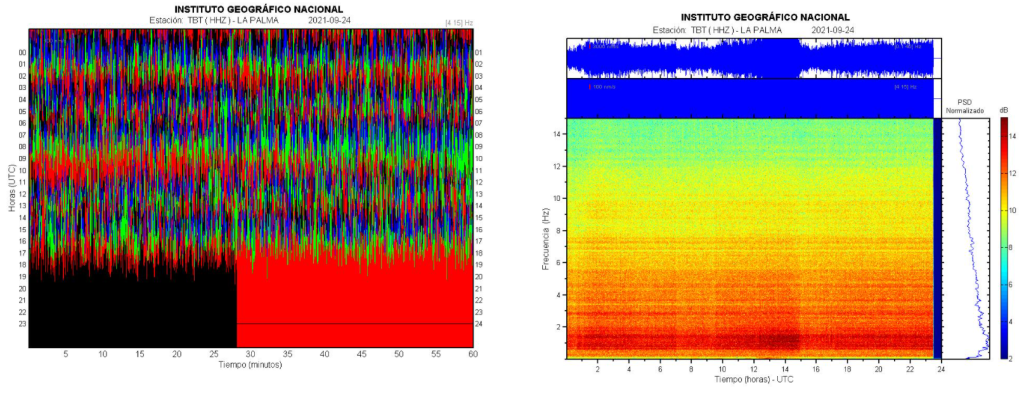
Fig 1: Seismic signal showing the end of the eruption. Source: IGN
Statistics
Eruption
The eruption started on 19 September 2021 as a flank eruption on the Cumbre Vieja volcano and ended on 13 December 2021. The duration of the eruption was 85 days and 8 hours – the longest for which there are historic records.
The eruptive style is described as Strombolian fissural with phreatomagmatic pulses.
The average height of the plume was 3.5km and its the maximum height was 8.5 km on 13 December 2021.
Edifice
The cone’s height is now 1,121m.
There are six craters, with diameters ranging between 106m and 172m.
Lava
200 million cubic meters erupted, covering an area of 1,219 hectares with an average thickness of 12m and maximum width of 3,350m.
The maximum temperature was 1,140°C.
Two lava deltas were created covering c. 48 hectares (one c. 43 hectares and the other 5 hectares).
Damage
2,988 buildings were destroyed and 138 damaged, according to satellite data. This is initially analysed by the local authorities as 1,345 residential properties, 180 agricultural, 75 industrial, 44 leisure, 16 public and 16 other; the shortfall is attributed to properties having more than one building within their boundaries.
Infrastructural damage includes: 73.8 km of road have been damaged along with streets and crossings; and, 130km power lines, 85 medium voltage towers, 1500 low voltage poles and 19 distribution centres.
We do not have an up to date analysis of the extent of the damage to crops and livestock.
Around 7,000 people were evacuated.
There was sadly one fatality which is under investigation.
Seismic Activity
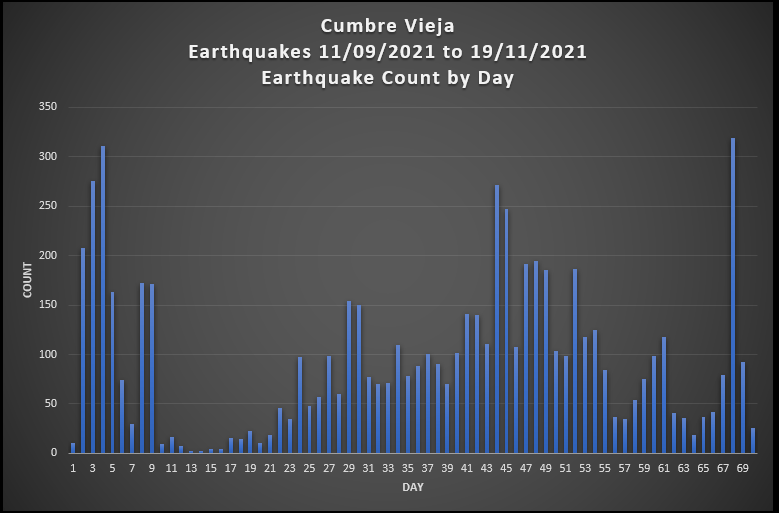
9,135 earthquakes were recorded in the period from 11 September (the onset of the swarm) and today, 27 December 2021. Due to the severity of the volcanic tremor, many smaller quakes were not recorded.
We have plotted the sequence. The results are shown in the video below.
The eruption of Cumbre Vieja continues unabated with Strombolian activity, lava fountains from many vents, lava flows, and ash emissions. . As of 16 November 2021, Copernicus reported that 1,042.1 hectares of land have been covered by lava. Rainfall now adds to the hazards created by volcanic ash. The cone reached a height of 1,130m by 10 November 2021. Sadly, one fatality has occurred; one person who had gone to assist with ash clearance was found dead in his home.
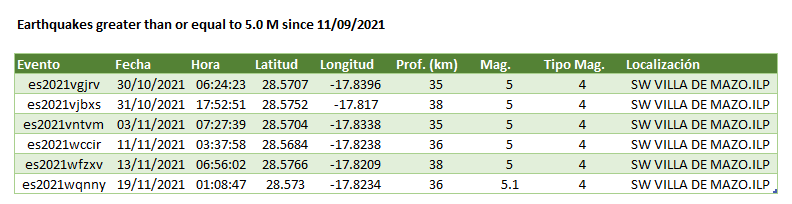
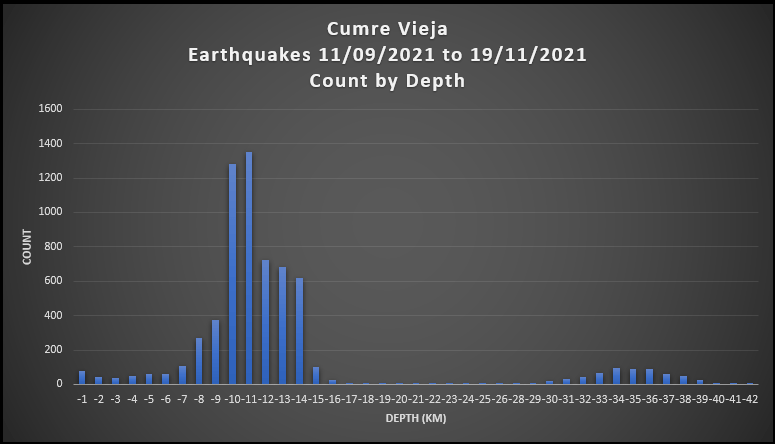
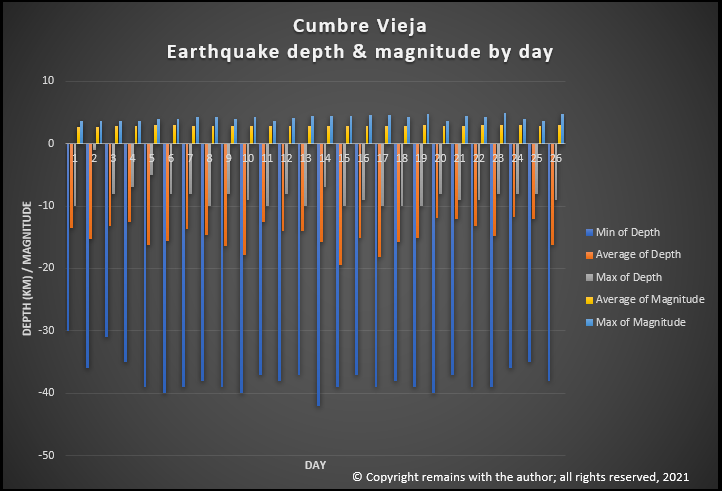
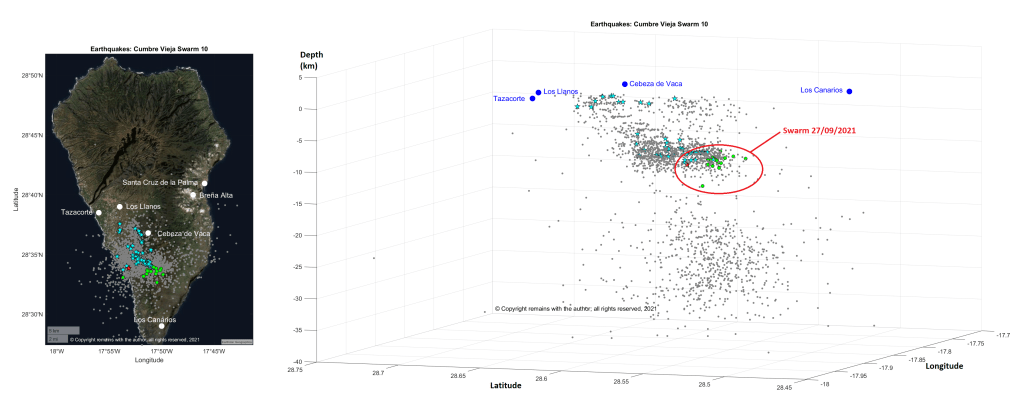
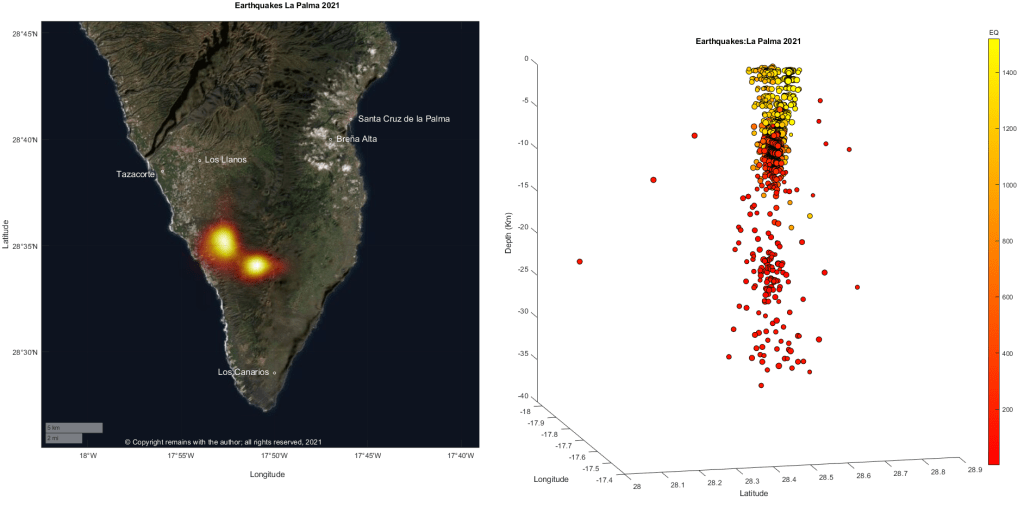
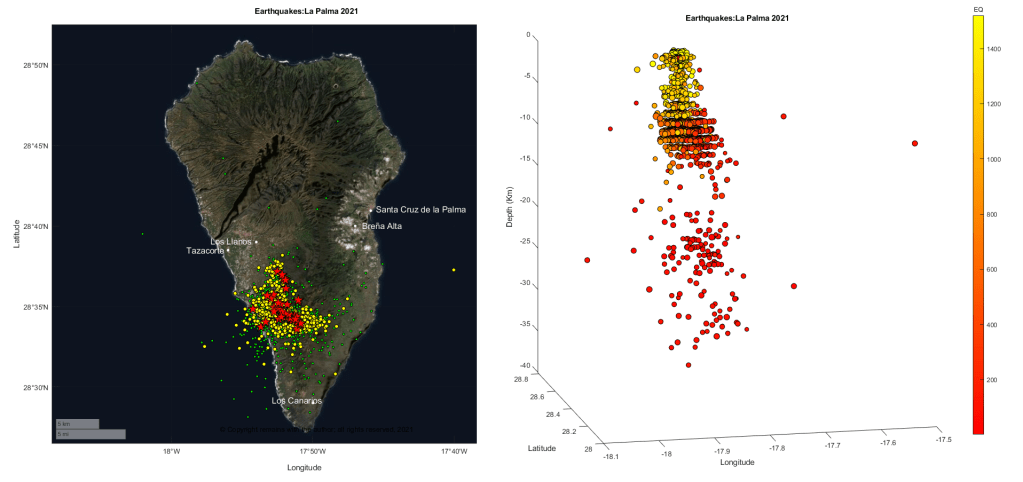
Here are updated earthquake plots. All of the action is centred around two depths: 7 -16 km and 30 -39 km, with a very few earthquakes in between; there are a few earthquakes with depths of more than 39 km.
For the updated video, we have provided the scatter plots for only earthquakes greater than or equal to 3.0 Mag. because the smaller earthquakes obscure the action; all earthquakes are included in the geoscatter plots.
Magma still appears to be stalling at the two depths: 7 -16 km and 30 -39 km prior to ascent (refer to La Palma: Earthquakes and Magma Plumbing for more information). How much of it reaches the surface remains to be seen.
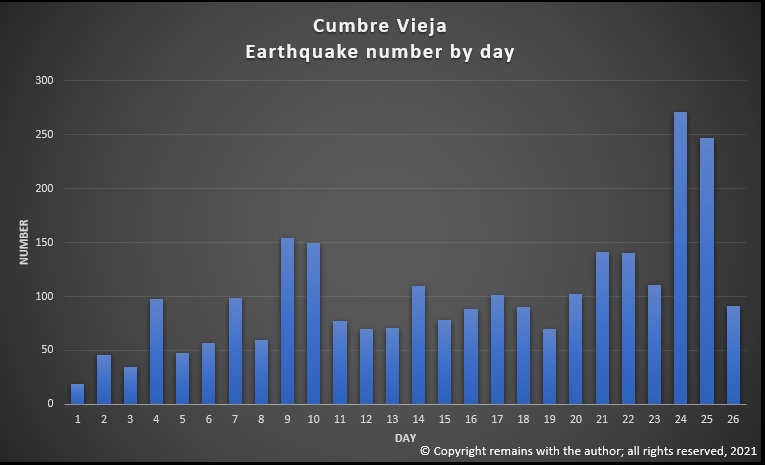
It has been a week since we updated our last earthquake plots for La Palma so time to take another look. The eruption has continued in the meantime, with seismicity and seismic signals increasing. Earthquake activity continues mainly within the two levels 7 -16km and 30 to 42km identified in our previous plots.
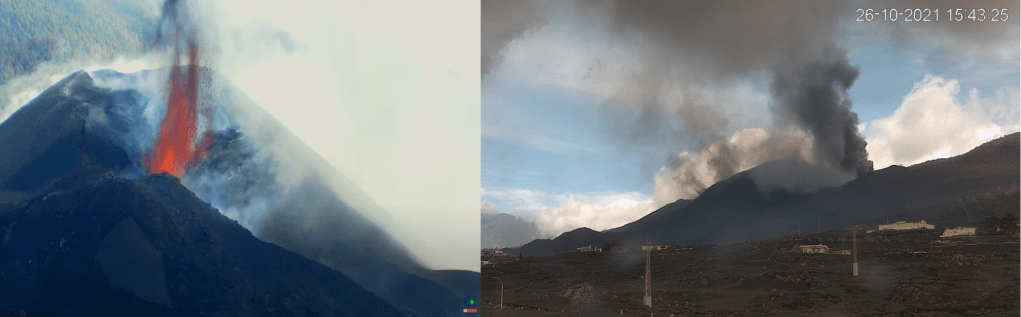
Several partial collapses of the main cone have occurred. The latest was yesterday, releasing a large amount of the lava to the west, which went over existing lava flows.
The latest statistics reported on 26th October 2021 are:
908.2 hectares of land have been affected by lava.
2,162 buildings haven been destroyed by lava, with a further 124 suffering damage.
66.2km of roads have been lost, with a further 3.4km damaged.
6,800 hectares of land have been covered by ashfall (reported 22nd October 2021).
Cost of lost banana plantations c.100m Euros, 150 hectares are under lava and others are in the exclusion zones; other crops, vineyards and livestock farming are also impacted.
SO2 emissions 40,800 tons per day. CO2 emissions up.
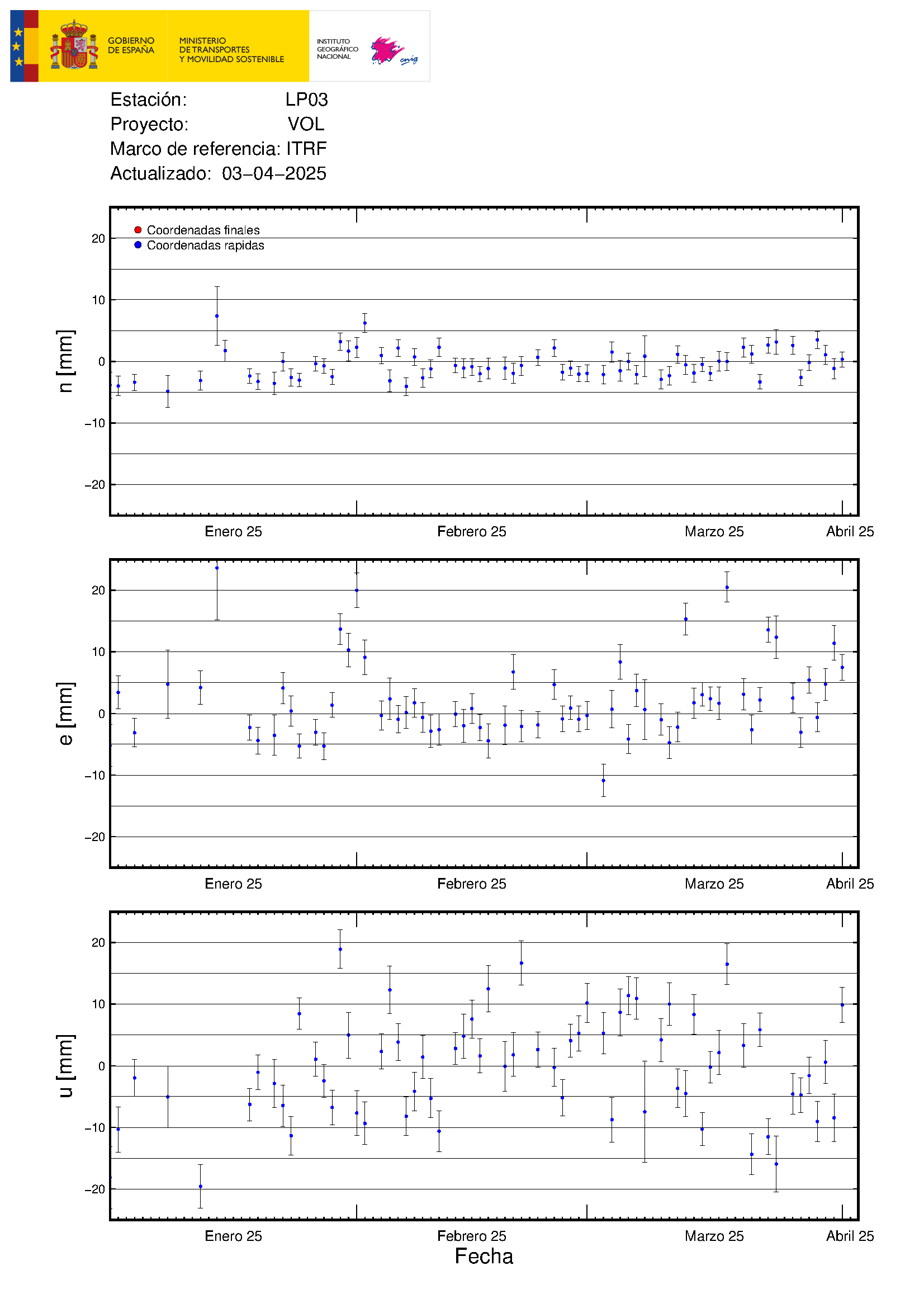
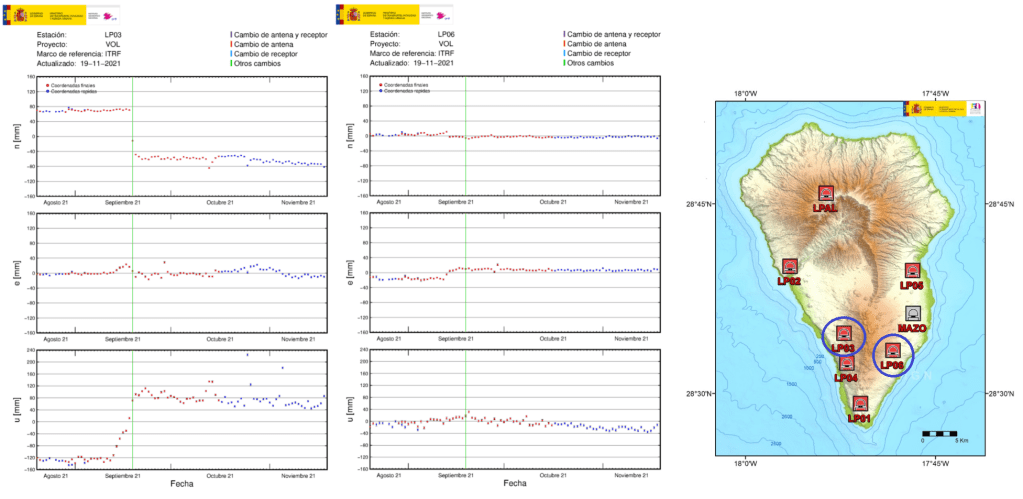
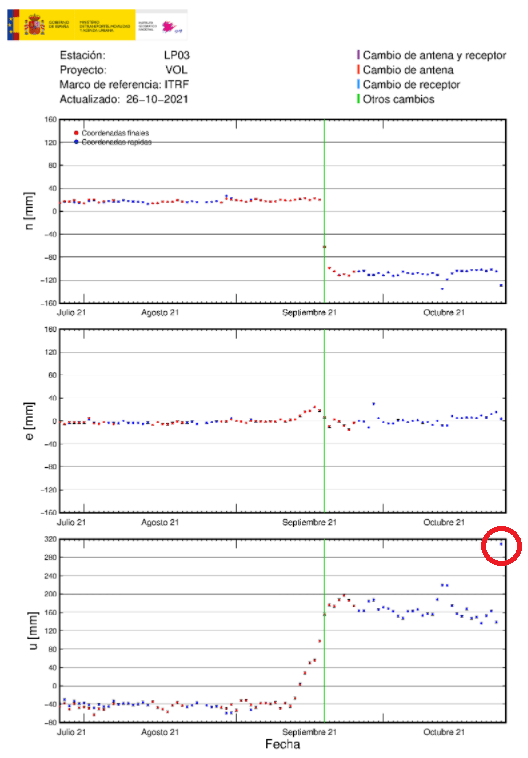
In the last 24 hours ground uplift of 10cm has been recorded at the station on the south of the volcano near the eruption site, which the volcanologists monitoring the eruption think may signal an increase in lava flow or the opening of a new vent.
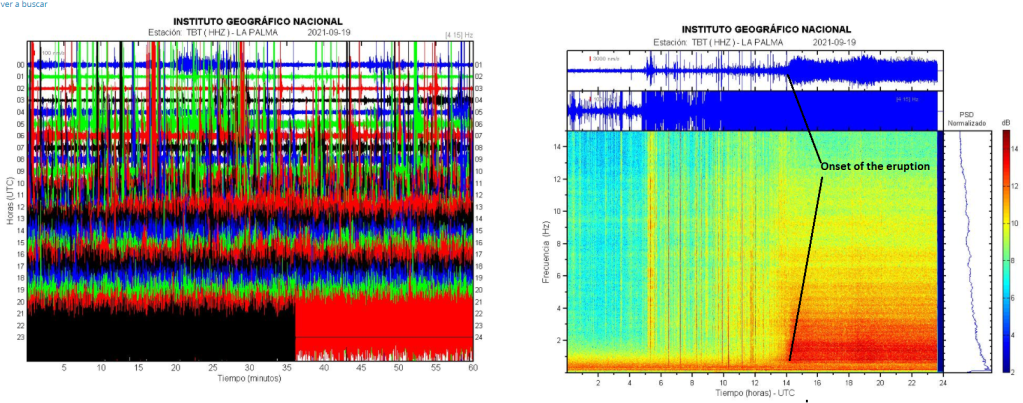
Fig 2: Ground deformation at the station nearest the eruption site. We have circled the latest data point to make it easier to spot. Green line marks the onset of the eruption (added by IGN). Source: IGN
We have made geoscatter and scatter plots of the swarm from day 21, the onset of the deeper earthquakes. We have also made plots of the earthquakes over 3.0M, as these tend to get lost in the in the middle level swarm (7-16km).
There are now a few earthquakes between the two swarms but little in the way of reported earthquakes heading for the surface; the latter may mean that lava is flowing freely through the existing conduit, or that a new conduit may be in the offing. The hike in ground deformation reported above near the eruption site may indicate that whatever ensues, it is likely to be near the current eruption site – speculation on our part.
The eruption is now in its sixth week, lasting longer than recent previous eruptions, with no sign of waning. Has the initial eruption of magma created the right conditions for new magma to erupt from a greater depth, e.g. by creating a pathway for it and/or removing some of the constraining pressure? Only time, and a lot of research by the experts, will tell.
Our thoughts are with those impacted by the eruption. While no lives have been lost, the economic damage and personal impact could be huge.
The official source for updates is IGN. You can find them on Twitter at IGN-CNIG @IGNSpain.
Update 27.09.2021
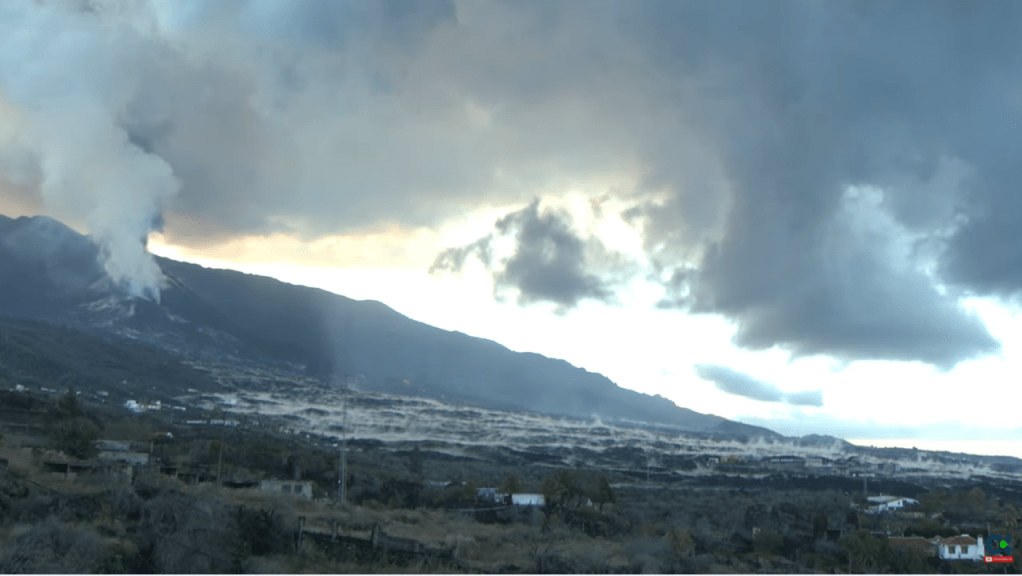
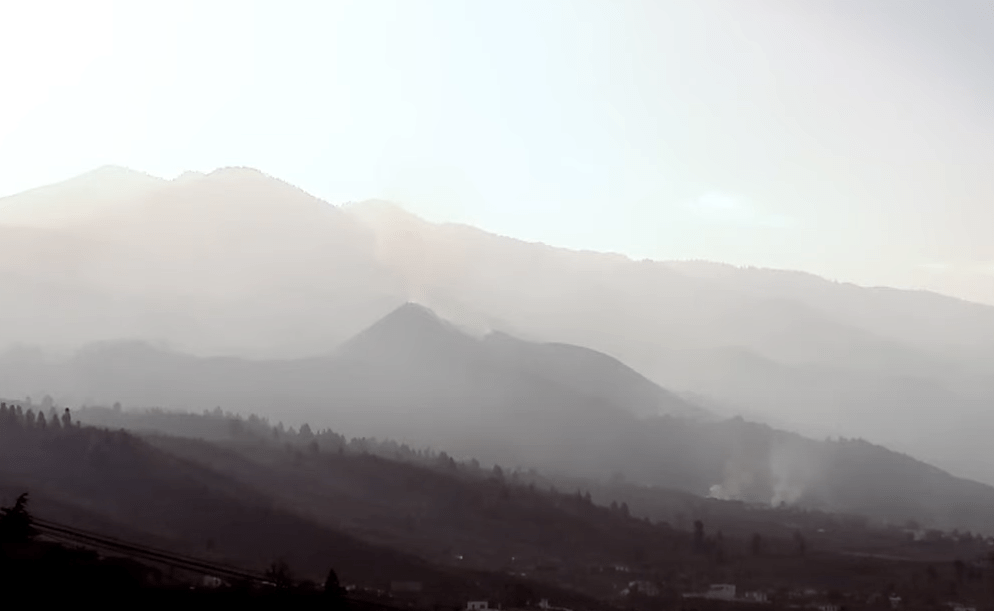
Fig 10: The volcano taking a short break this morning, looking deceptively tranquil. The main cone is in the centre of the image. Source: screen shot from TV Canarias: www.youtube.com
The eruption is now in its ninth day. The volcano took a break for a couple of hours today, to resume with a thick ash column and a few explosions. The new seismic swarm today may indicate that the volcano is recharging. It would be unusual for an eruption here to be so short.
The airport was closed for a period over the weekend while ash was cleared.
The cone broke in its southern section releasing a new lava which flowed over the older flow. The new lava reached speeds of 250 – 300 metres per second. Sadly, the church and other buildings in Todoque were razed.
Lava may now reach the sea. It is now between 800m and 1,000m from the sea, reaching the outskirts of Tazacorte. People in San Borondón, Marina Alta, Marina Baja and La Condesa are confined to their homes with their doors and windows closed due to the risk of ash and gases. We can only imagine the stress they are under right now.
There have been up to 4 eruptive centres and two lava flows. New emission points emerged in the NE section of the cone; they have since merged.
On 26 September 2021, the lava covered an area of 2.62 km2, with an average thickness of 12.1 metres a maximum thickness of 50 metres and a volume of 31 million cubic metres. The latest estimate of damage at the time of writing is that over 500 homes and 237.5 hectares of land are now covered by lava. 18.9 km of roads have been destroyed. 1,507 hectares of land are covered by ash.
The Ramón Margalef is to carry out a survey of the sea floor to check for submarine emissions.
The explosive phase, combined with the opening of new vents on the south west of the cone, has led to the evacuation of Tajuya, Tacande de Arriba and Tacande de Abaja.
The total number of evacuated is now 6,200.
Large pyroclastic materials are being ejected, and highly fluid lava with speeds of 60-80m/s is being discharged from the new vents.
There are fears that the main cone may collapse as a result of new vents and more explosions. This would lead to high-speed pyroclastic flows. You cannot outrun a pyroclastic flow.
The eruption column reaches 6km above sea level.
Although airspace is still open, Iberia, CanaryFly and Binter have suspended flights to / from La Palma, and Vueling has cancelled its Saturday flight from Barcelona to La Palma.
The Roque de los Muchachos Observatory has closed its telescopes to protect the mirrors from ash; it is still monitoring the gas and ash clouds from the volcano.
Lava covers 190 hectares; 420 buildings and 15.2 km of roads have been lost.
The area impacted by the volcano to be formally been declared a disaster zone.
It is thought that the older lava flows are slow due to the gradients they are on; they may speed up if they hit a higher gradient.
The eruptive style has changed from effusive to more explosive: of the two lava flows, the northern flow has nearly stopped and the southern is c.2,100 metres from the sea, advancing at 4 metres per hour having fanned out. It is now thought that it is unlikely that lava will reach the sea. IGN have reported several large explosions.
The aviation code for La Palma has been raised from orange to red, due to gas and ash. Airspace remains open except for two restricted areas. Airlines are advised to get flight plans checked before planes depart.
2 more fissures have opened since our previous update.
Ground uplift is now c. 24cm.
26 million cubic metres of lava have been emitted, razing 220 hectares of land and covering 180.1 hectares. The northern flow is 12m thick at the front and the southern flow, 10m thick.
390 properties and 14km of roads have been destroyed.
Banana harvesting has been suspended in the area to allow people to collect their belongings.
Farmers in restricted areas require permission from PEVOLCA to irrigate their crops.
More than 6,000 people have been evacuated to date.
The Official College of Psychology of Santa Cruz de Tenerife has reminded us that those losing property to the eruption are suffering trauma; they are not helped by seeing images of this repeated multiple times on social media.
Sources: El Mundo (link below) & IGN-CNIG (link above)
We have updated our earthquake plots for the current swarm. We have put them together in a short video.
Air traffic is not affected; the airport remains open. Visitors are encouraged to the island.
166 homes have been confirmed as lost. More than 6,000 have now been evacuated.
Land covered by lava will not be cultivatable; to date, 103 hectares of land are covered. Contaminated soil may take 20 years or more to be usable. Loss of land is expected to cause considerable poverty.
Lava is approaching the Todoque in Los Llanos de Aridane.
Several roads are closed in the vicinity of the eruption: LP-211, LP-212, LP-213, LP-215 and LP-2.
At the time of writing lava has not been reported as reaching the sea. When it does, clouds of toxic and acid vapours, including chlorine, sulphur, carbon and hydrogen sulphides, hydrochloric acid, carbonic acid and CO2, will be released, forcing further evacuations.
SO2 emissions reached between 7,997 – 10,665 tons per day on the second day. SO2 emissions have reached the cost of Africa.
It is too early to say how long the eruption will last. The 1971 Teneguía eruption lasted 24 days and the 1949 Cumbre Vieja eruption lasted 33 days.
20.09.2021
No lives have been lost or injuries reported.
The airport remains open. Air traffic is not currently affected.
2 fissures had opened 200m apart, with 8 vents.
The temperature of the lava is over 1,000°C (last reported: 1,113°C).
The ground is continuing to inflate; more earthquakes are possible.
The south west coast of the island is at risk of landslides and rock falls.
The lava discharge rate is 0.7km per hour. The lava is expected to reach the ocean at c.8:00pm (has not happened yet; the lava slowed and diverted). When the lava reaches the ocean, toxic vapours will be released due to the chemical reactions between the hot lava and sea water; the areas impacted would be Tazacorte, near Playa Nueva, Los Guirres.
Between 6,000 and 9,000 tons per day of SO2 were emitted on the first day.
5,500 people evacuated.
A 3.8M earthquake signalled the opening of a new vent (the 10th) 900m from the main vent. The new stream of lava led to the evacuation of Tacando.
An earthquake swarm which started on 11 September 2021, accompanied by uplift, resulted in PEVOLCA raising the alert level for La Palma to yellow on 13 September 2021.
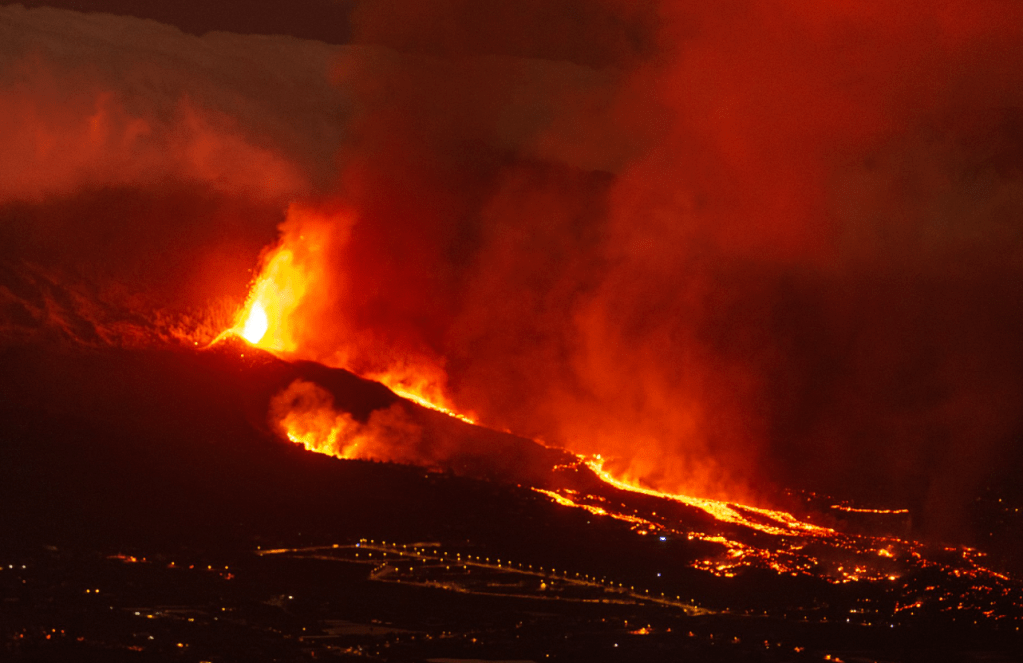
The eruption, itself, started on 19 September 2021 at 2:15pm (UTC) in Cabeza de Vaca, El Paso; the alert level is now red. c.5,000 people have been evacuated. To date, no lives have been reported as lost, property damage is yet to be assessed. Our thoughts are with those affected.
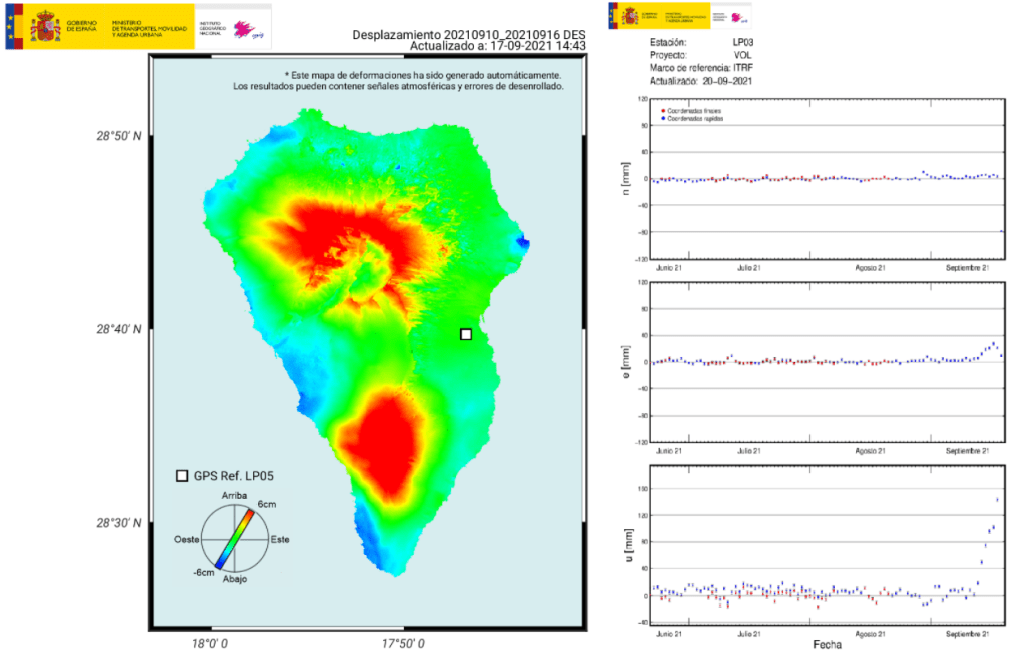
Fig 1b: Displacement and ground deformation measured pre-eruption. On the left, displacement is for the period 10/09/2021 and on the right, deformation is for the period June 2021 to September 2021 (to date). Source: IGN (link below).
At the time of writing, there are lava fountains and a large lava flow that is threatening people’s homes.
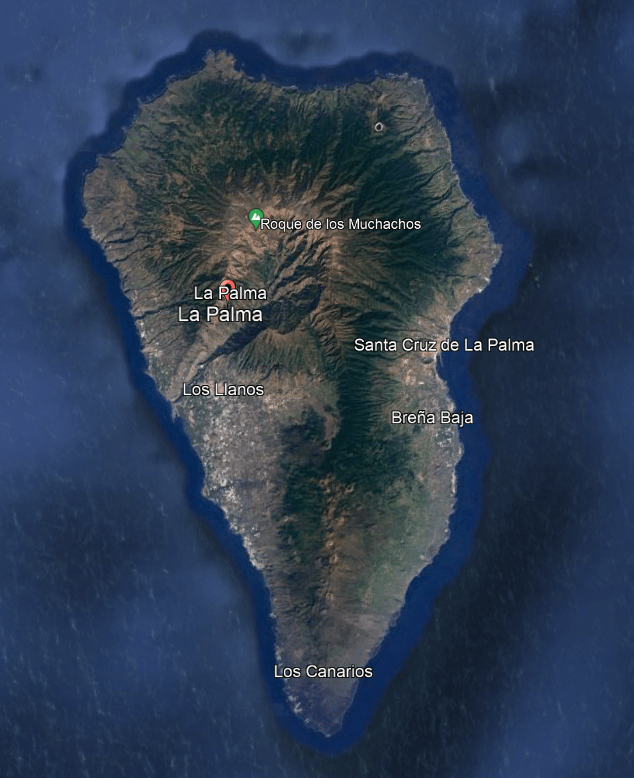
La Palma is a volcanic island with an area of 708 km2, located at the northwest end of the Canary Island archipelago above the Canary Island hotspot. The population of the island is c85,840; 15,720 live in the capital Santa Cruz de la Palma and 20,470 in Los Llanos de Aridane. The climate is tropical semi-arid. Its economy relies on agriculture and tourism; banana cultivation is centred in the valley of Los Llanos de Aridane; and, other crops include oranges, avocados and grapes. Fishermen operate from Tazacorte, Puerto Naos and Santa Cruz de la Palma. The island has abundant flora and fauna.
The island is comprised of many volcanoes, including an extinct Pliocene – Pleistocene northern shield volcano and the active Pleistocene – Holocene Cumbre Vieja. Cumber Vieja is the most active volcano in the Canary Islands, last erupting in 1971.
The northern shield lavas comprise basanites, alkali basalts, tephrites, phonolites and trachytes, reflecting magma evolution during the shield-building stage. The younger Cumbre Vieja volcano has more basaltic lavas.
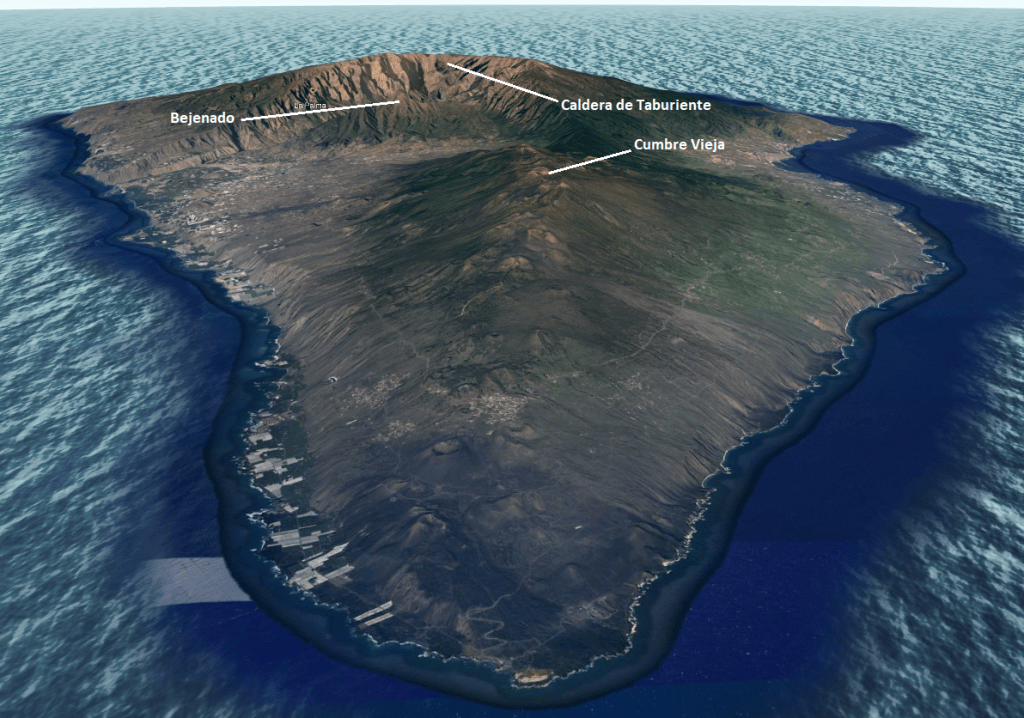
Fig 3: Caldera de Taburiente, Bejenado and Cumbre Vieja. Source: Google Earth
Building the Island
The island emerged in five stages: the initial submarine-building of a seamount, followed by the creation of four volcanoes during the shield-building stage, as shown below.
Time scale
Volcano
Lavas
Pliocene
Sea-mount
Basalt, trachybasalt, phonolite, trachyte
1.7Ma -1.2Ma
Garafía
Basalt
1.2Ma – 0.4Ma
Taburiente
Basalt, tephrite, phonolite
0.56-0.49ka
Bejenado
Basalt, tephrite, phonolite
125ka-present
Cumbre Vieja
Basalt, basanite, trachyte, phonolite
Garafía is covered by the later Taburiente volcano; its rocks being visible only in a few outcrops. Around 1.2Ma gravitational collapse of its southern flank left debris avalanche deposits in the sea.
Activity at Taburiente volcano commenced without a break following the collapse at Garafía. Its growth included the development of triple rift zones – parallel swarms of dikes at c 120° angles, indicative of magma doming. Activity then migrated southwards.
A landslide, clearly visible on maps, occurred between the building of Taburiente and Bejenado, and was responsible for the creation of the Caldera de Taburiente. Bejendo volcano is a small volcano that emerged to fill the collapse embayment. Subsequent erosion enlarged the caldera.
Cumbre Vieja emerged after activity had ceased in the north. From c. 125,000 years ago, volcanic activity built the north-south ridge until 80,000 – 20,000 years ago when activity declined. From 20,000 – 8,000 years ago activity picked up again, focusing on the north-south rift and also north-west and north-east rifts. Activity now focuses on the north-south rift. There is concern that another flank collapse could occur following the emergence of west facing normal faults during the 1949 eruption.
Eruptive History
GVP records 13 Holocene eruptions for La Palma, seven of which were VEI 2s, with mild explosive activity and lava flows that caused property damage (the remaining 6 have not been assigned a VEI number). Eruptions during the last 7,000 years have formed cinder cones and craters along the north – south axis of Cumber Vieja. Lava flows reached the sea in 1585, 1646, 1677-78, 1712, 1949, and 1971; a large lava field emplaced during the 1677-78 eruption covers the southern tip of the island.
GVP lists the lava types as Trachybasalt / Tephrite Basanite, Phono-tephrite / Tephri-phonolite, Phonolite, Basalt / Picro-Basalt, Trachyte / Trachydacite.
Seismic Activity
The current swarm was preceded by others: one in 2017, one in 2018, five in 2020, and three in 2021. The earthquakes in the previous swarms were deeper, between 20 and 30 km, and were less intense than the current swarm.
We have downloaded the earthquake data from IGN for 2021 to 19.09.2021 11:09 to see what has been going on. While these are only the earthquakes that have been located (there are thousands that have not), the plots clearly indicate magma ascent.
We do not have a precise location for the vents of the current eruption so are unable to compare it to the earthquake plots.
If you wish to follow the eruption as it progresses, IGN has up to date information on the eruption at La Palma on: Instituto Geográfico Nacional (ign.es).
 An Armchair Volcanologist