We have updated the earthquake plots for Fagradalsfjall, Iceland, for the swarm which started on 21 December 2021.
The swarm had an intense initial period while magma moved along a lateral dike, followed by a less intense period, accompanied by magma ascent. The Icelandic Met Office, IMO, say that the swarm is following the same pattern as that which preceded the eruption in March 2021.
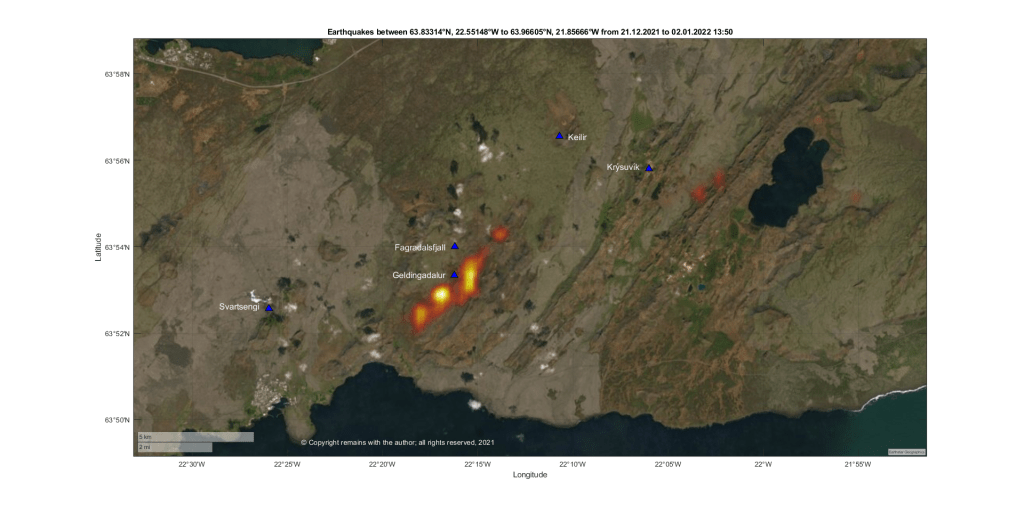
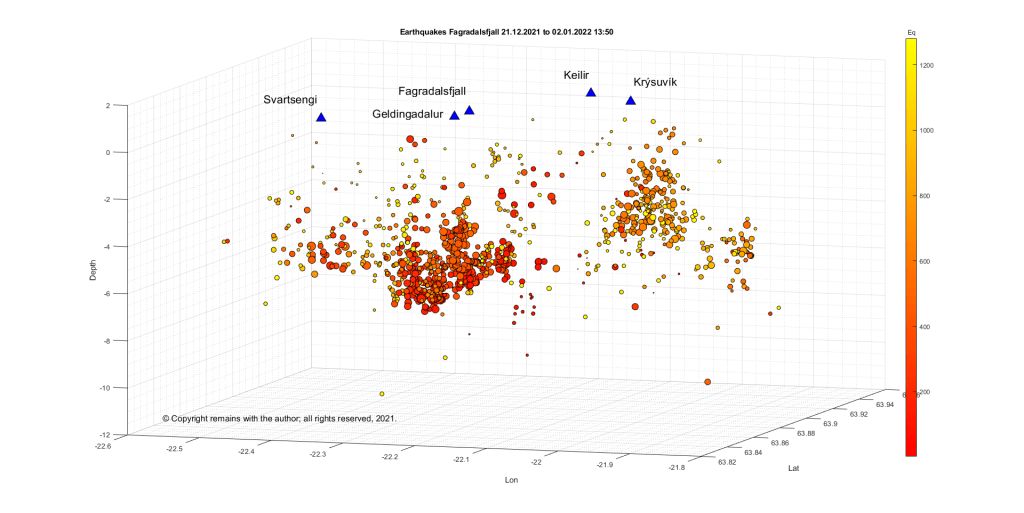
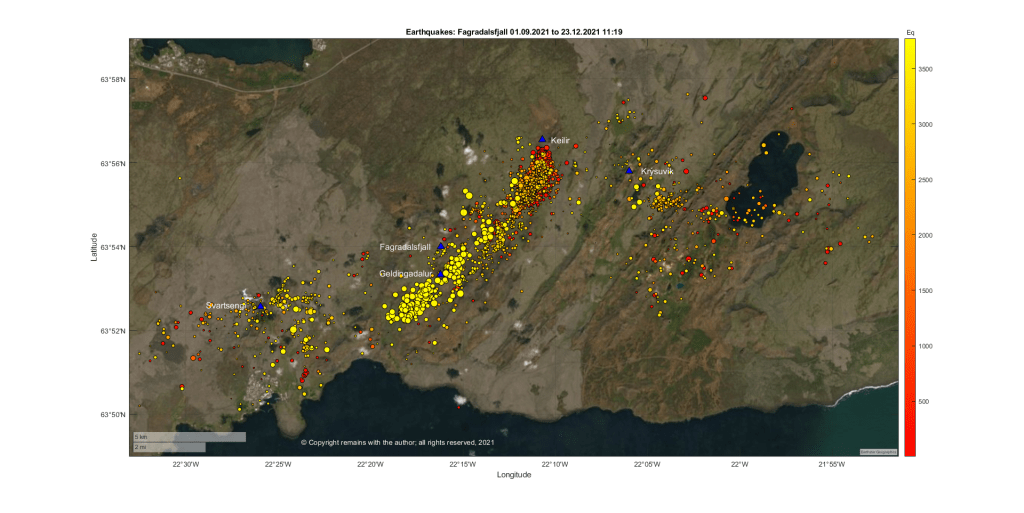
Magma is ascending under Fagradalsfjall, itself. The outlying earthquakes, e.g., at Svartsengi and Krýsuvík, are what Iceland calls triggered earthquakes. Triggered earthquakes are tectonic in nature, arising as local faults respond to magma movement.
Following a drop in seismicity over the past couple of days, visitors are now advised to avoid the area.
A similar drop in seismicity was observed immediately before the March 2021 eruption.
If the volcano does erupt again, this would be considered a new eruption in the same place; the earlier eruption was declared over three months after the cessation of activity on 19 September 2021.
Update 28/12/2021
The earthquake swarm at Fagradalsfjall, Iceland, is continuing. While the swarm has slowed down a bit, 19,000 earthquakes have been recorded by the automatic SIL system since the swarm started. 14 earthquakes over 4.0 magnitude have occurred. An alert for the risk of rockfall and landslides in the area has been raised; visitors are advised to stay away from the area.
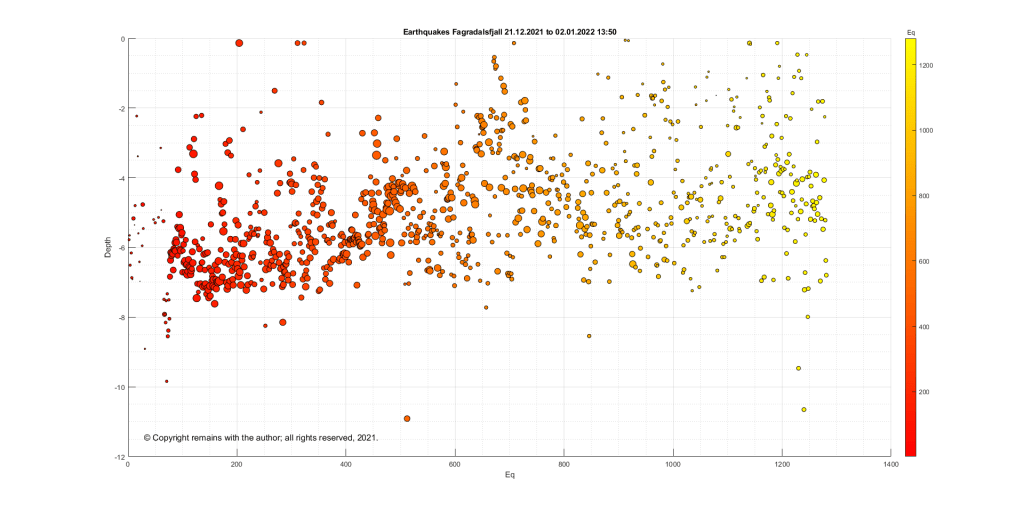
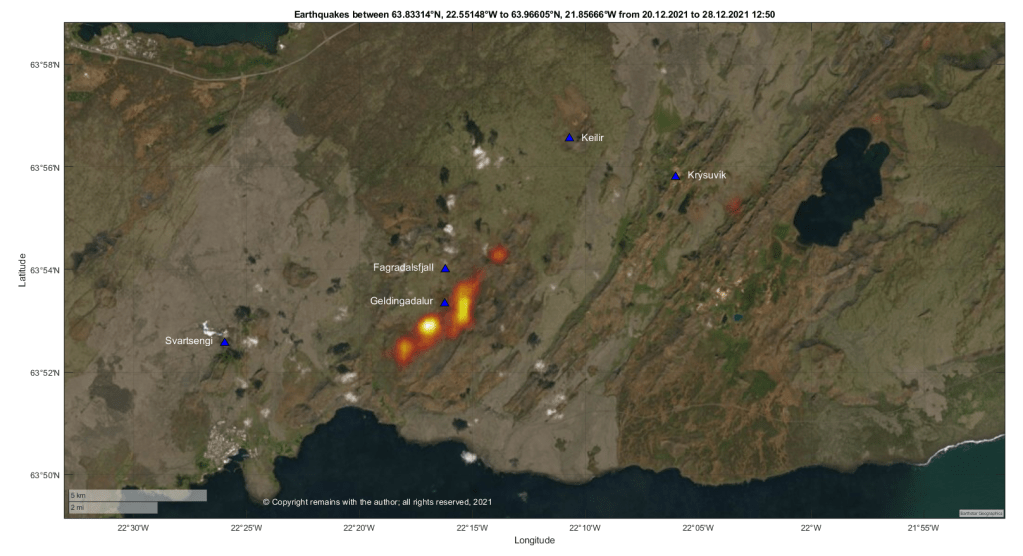
We have plotted the confirmed earthquakes from 20 December 2021 to 28 December 12:50. This shows the dike propagation south west of Geldingadalur, with additional activity near Kýsuvík and Svartsengi.
Only time will tell where and when lava will emerge. In the meantime, if you are lucky enough to be in the area, be aware of the risk of rock fall and landslip.
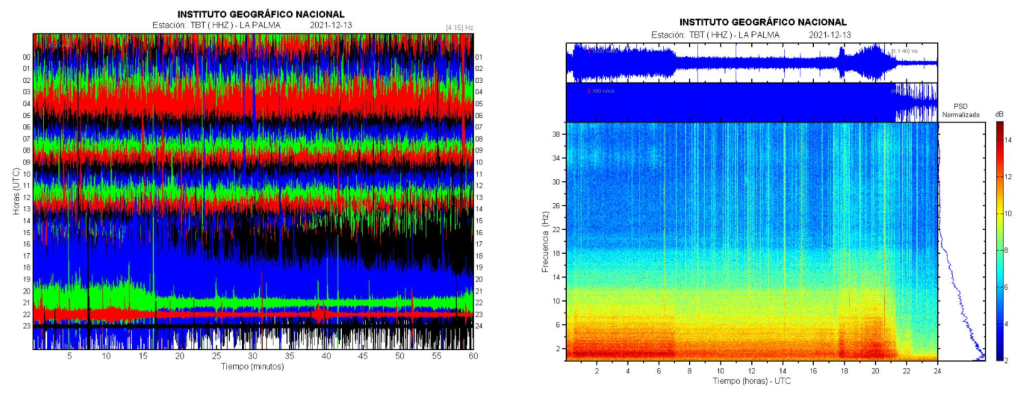
There was some good news for La Palma over the week end; the eruption was declared over on 25 December 2021. The eruption, itself, ended on 13 December 2021 at 22:21. There was a precautionary period of waiting before announcing the end of the eruption.
This is an important milestone in the process to recover and rebuild.
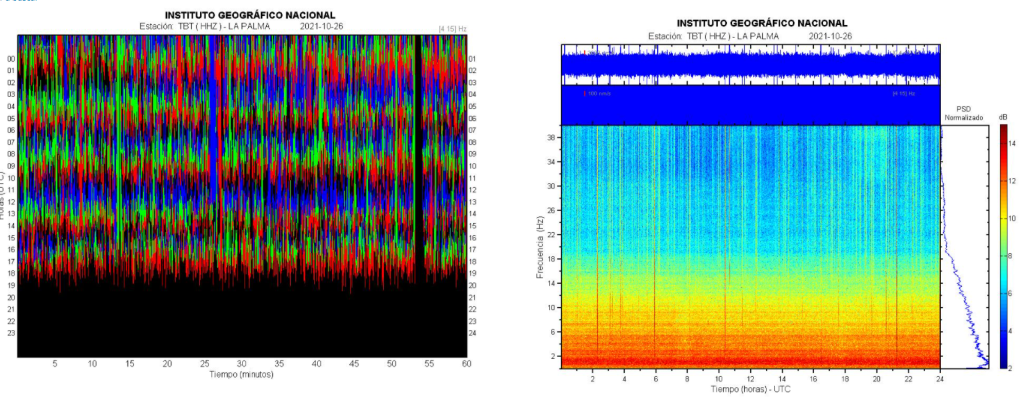
Fig 1: Seismic signal showing the end of the eruption. Source: IGN
Statistics
Eruption
The eruption started on 19 September 2021 as a flank eruption on the Cumbre Vieja volcano and ended on 13 December 2021. The duration of the eruption was 85 days and 8 hours – the longest for which there are historic records.
The eruptive style is described as Strombolian fissural with phreatomagmatic pulses.
The average height of the plume was 3.5km and its the maximum height was 8.5 km on 13 December 2021.
Edifice
The cone’s height is now 1,121m.
There are six craters, with diameters ranging between 106m and 172m.
Lava
200 million cubic meters erupted, covering an area of 1,219 hectares with an average thickness of 12m and maximum width of 3,350m.
The maximum temperature was 1,140°C.
Two lava deltas were created covering c. 48 hectares (one c. 43 hectares and the other 5 hectares).
Damage
2,988 buildings were destroyed and 138 damaged, according to satellite data. This is initially analysed by the local authorities as 1,345 residential properties, 180 agricultural, 75 industrial, 44 leisure, 16 public and 16 other; the shortfall is attributed to properties having more than one building within their boundaries.
Infrastructural damage includes: 73.8 km of road have been damaged along with streets and crossings; and, 130km power lines, 85 medium voltage towers, 1500 low voltage poles and 19 distribution centres.
We do not have an up to date analysis of the extent of the damage to crops and livestock.
Around 7,000 people were evacuated.
There was sadly one fatality which is under investigation.
Seismic Activity
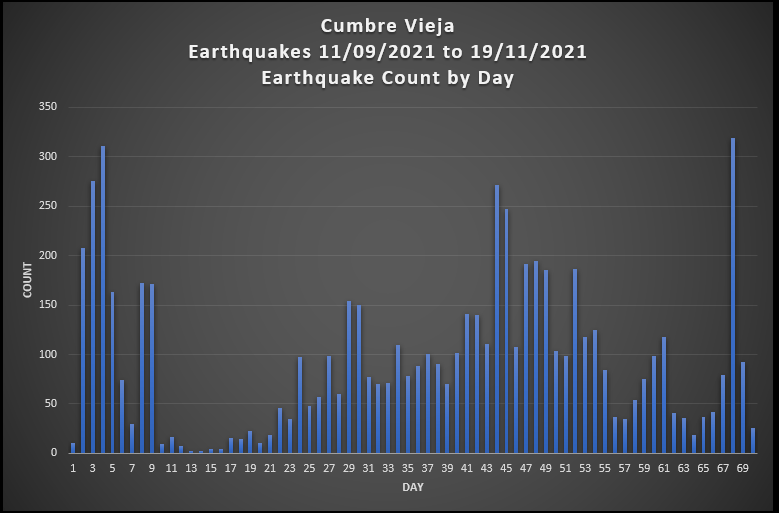
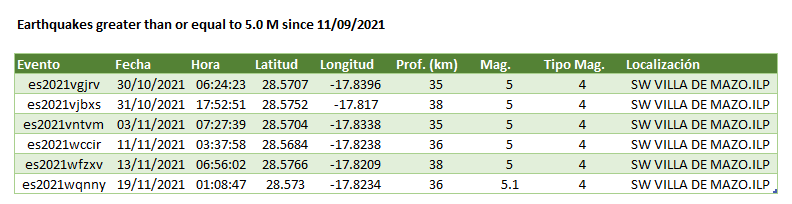
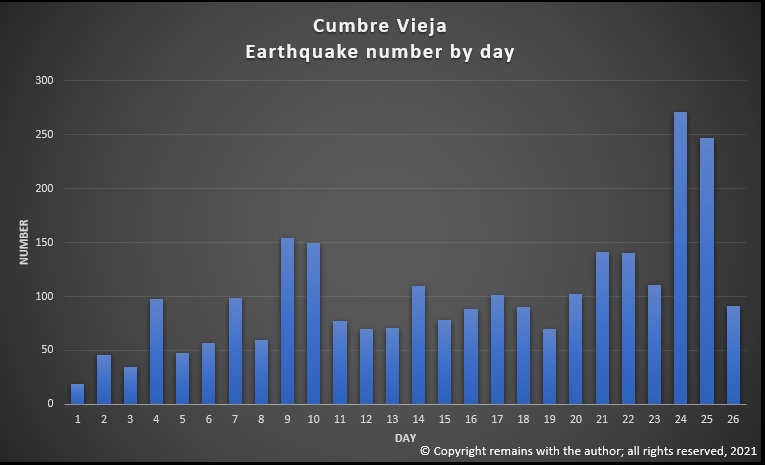
9,135 earthquakes were recorded in the period from 11 September (the onset of the swarm) and today, 27 December 2021. Due to the severity of the volcanic tremor, many smaller quakes were not recorded.
We have plotted the sequence. The results are shown in the video below.
A large earthquake swarm started at Fagradalsfjall late on 21 December 2021, 2-4 km NE of Geldingadalir, thought to be caused by a lateral dike intrusion. Due to the increased seismic activity, the aviation code was raised to Orange yesterday, 22 December 2021.
Fig 1: Icelandic Met Office, IMO’s map of the swarm. Source: IMO
The eruption at Fagradalsfjall had stalled on 18 September 2021, with no new lava flows to the time of writing. Ground deformation indicated that magma was still flowing into the crust.
Fig 2: Ground deformation at Krýsuvík. The red line denotes the start of the March 2021 eruption. Source: IMO
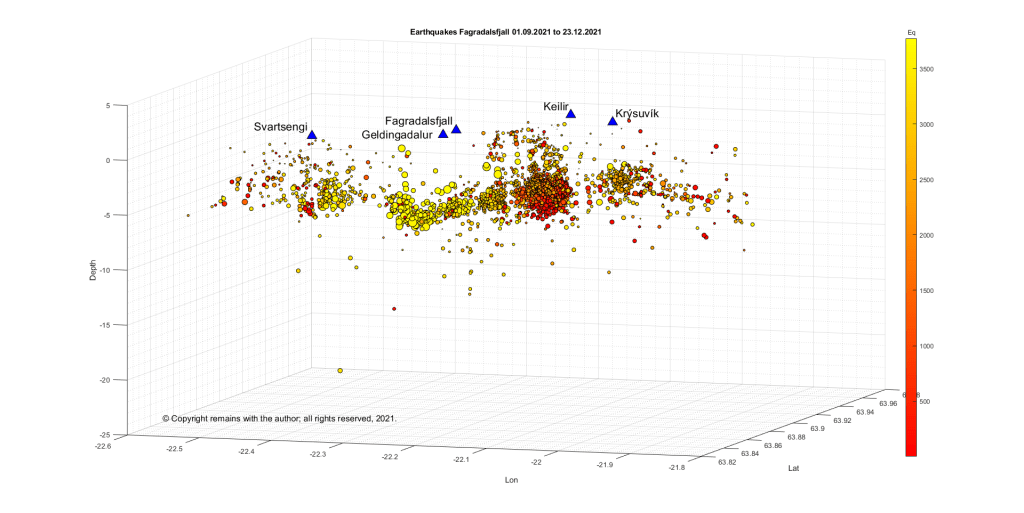
We have downloaded and plotted the earthquakes from 1 September 2021 to 23 September 2021 (source for raw data: IMO ). This includes the swarm which started near Mount Kelir in late September 2021, which may or may not have heralded the current reactivation of the dike.
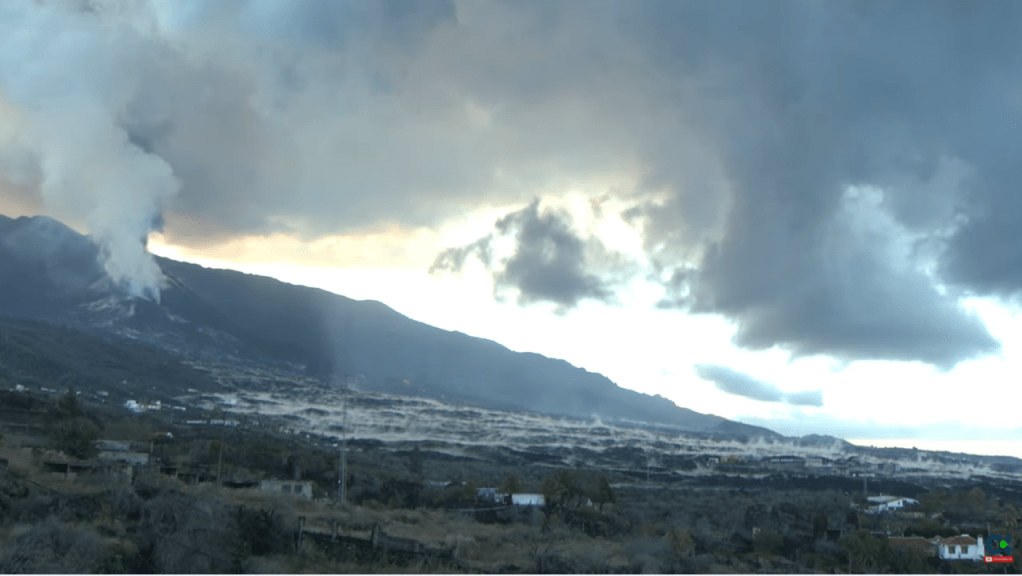
The eruption of Cumbre Vieja continues unabated with Strombolian activity, lava fountains from many vents, lava flows, and ash emissions. . As of 16 November 2021, Copernicus reported that 1,042.1 hectares of land have been covered by lava. Rainfall now adds to the hazards created by volcanic ash. The cone reached a height of 1,130m by 10 November 2021. Sadly, one fatality has occurred; one person who had gone to assist with ash clearance was found dead in his home.
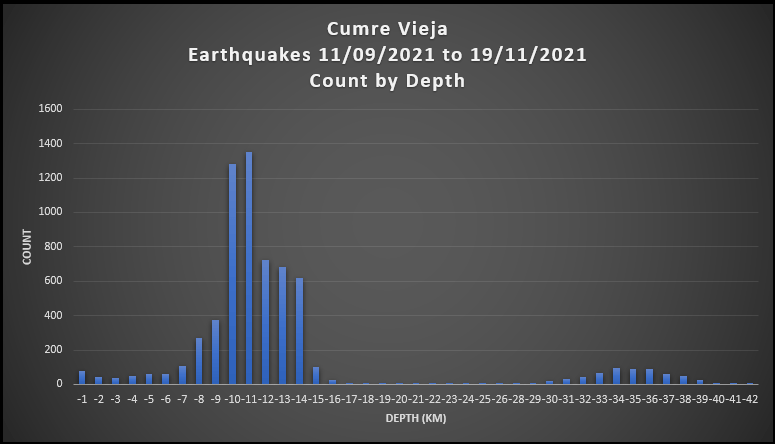
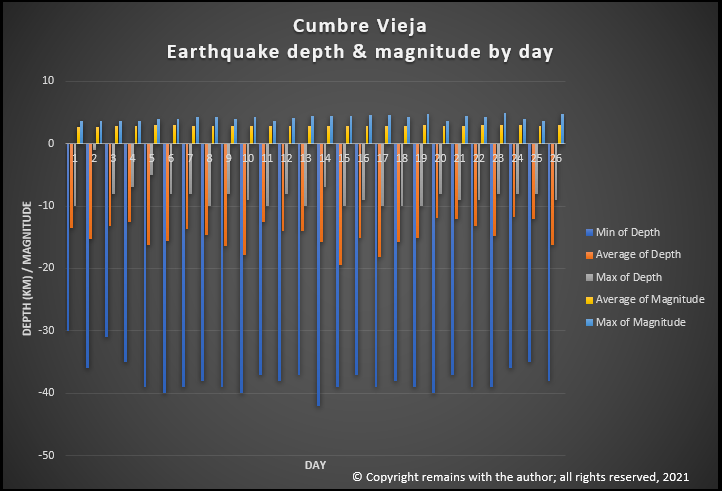
Here are updated earthquake plots. All of the action is centred around two depths: 7 -16 km and 30 -39 km, with a very few earthquakes in between; there are a few earthquakes with depths of more than 39 km.
For the updated video, we have provided the scatter plots for only earthquakes greater than or equal to 3.0 Mag. because the smaller earthquakes obscure the action; all earthquakes are included in the geoscatter plots.
Magma still appears to be stalling at the two depths: 7 -16 km and 30 -39 km prior to ascent (refer to La Palma: Earthquakes and Magma Plumbing for more information). How much of it reaches the surface remains to be seen.
It has been a week since we updated our last earthquake plots for La Palma so time to take another look. The eruption has continued in the meantime, with seismicity and seismic signals increasing. Earthquake activity continues mainly within the two levels 7 -16km and 30 to 42km identified in our previous plots.
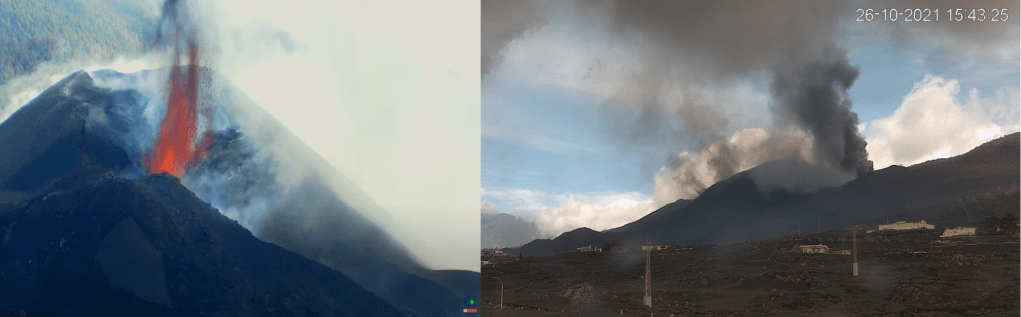
Several partial collapses of the main cone have occurred. The latest was yesterday, releasing a large amount of the lava to the west, which went over existing lava flows.
The latest statistics reported on 26th October 2021 are:
908.2 hectares of land have been affected by lava.
2,162 buildings haven been destroyed by lava, with a further 124 suffering damage.
66.2km of roads have been lost, with a further 3.4km damaged.
6,800 hectares of land have been covered by ashfall (reported 22nd October 2021).
Cost of lost banana plantations c.100m Euros, 150 hectares are under lava and others are in the exclusion zones; other crops, vineyards and livestock farming are also impacted.
SO2 emissions 40,800 tons per day. CO2 emissions up.
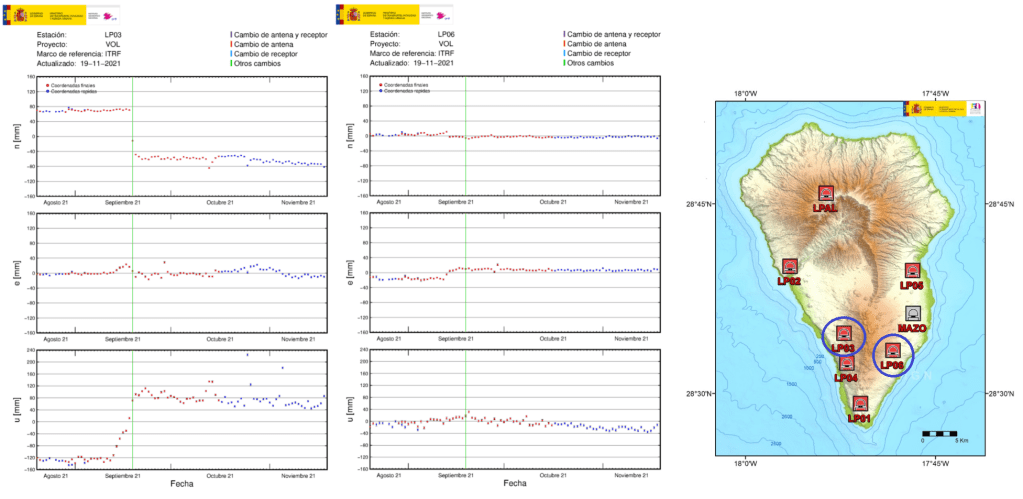
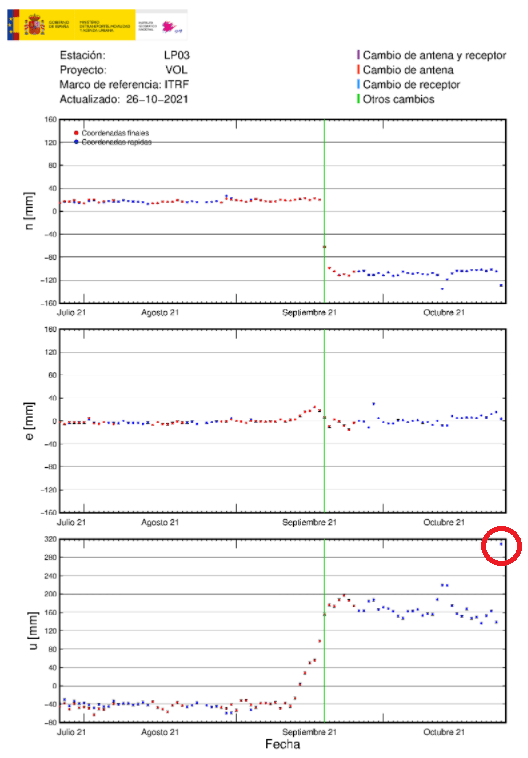
In the last 24 hours ground uplift of 10cm has been recorded at the station on the south of the volcano near the eruption site, which the volcanologists monitoring the eruption think may signal an increase in lava flow or the opening of a new vent.
Fig 2: Ground deformation at the station nearest the eruption site. We have circled the latest data point to make it easier to spot. Green line marks the onset of the eruption (added by IGN). Source: IGN
We have made geoscatter and scatter plots of the swarm from day 21, the onset of the deeper earthquakes. We have also made plots of the earthquakes over 3.0M, as these tend to get lost in the in the middle level swarm (7-16km).
There are now a few earthquakes between the two swarms but little in the way of reported earthquakes heading for the surface; the latter may mean that lava is flowing freely through the existing conduit, or that a new conduit may be in the offing. The hike in ground deformation reported above near the eruption site may indicate that whatever ensues, it is likely to be near the current eruption site – speculation on our part.
The eruption is now in its sixth week, lasting longer than recent previous eruptions, with no sign of waning. Has the initial eruption of magma created the right conditions for new magma to erupt from a greater depth, e.g. by creating a pathway for it and/or removing some of the constraining pressure? Only time, and a lot of research by the experts, will tell.
The eruption at La Palma is continuing unabated, sadly with more evacuations for areas in the path of the lava.
Let’s take a moment to look at her fellow island, El Hierro. La Palma and El Hierro occupy the same N-S line at the western end of the Canary Island archipelago: La Palma to the north and El Hierro to the south. El Hierro experienced a N-S aligned fissure eruption between October 2011 and March 2012.
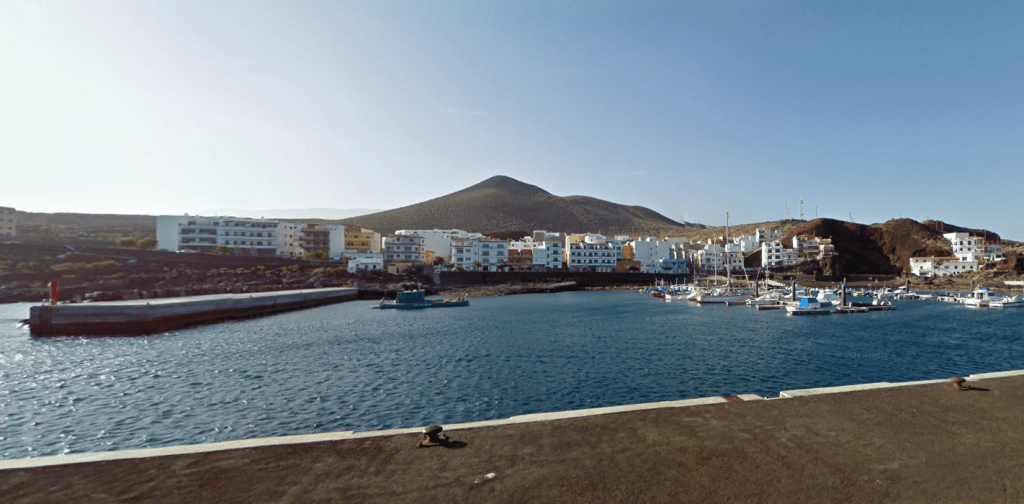
Fig 1: La Restinga as seen from the harbour wall. Image captured from Google Maps, 2021.
Background
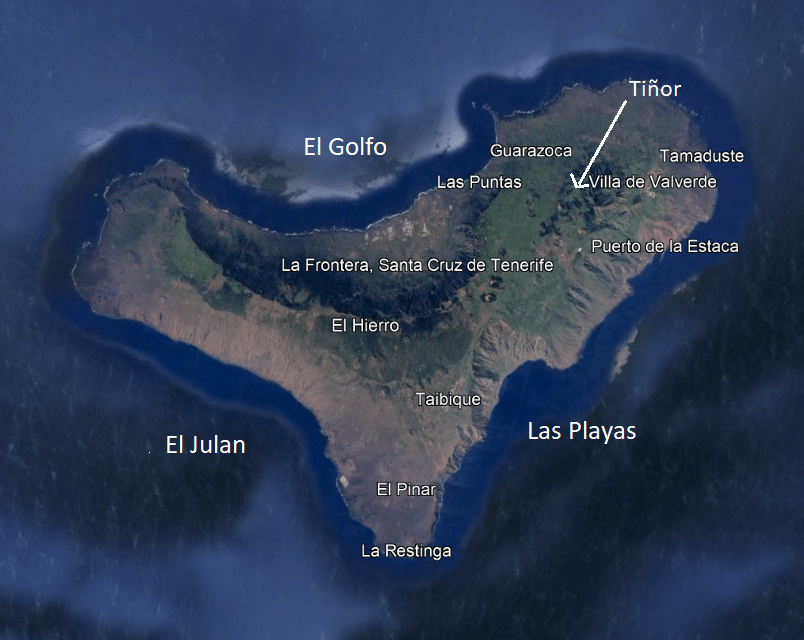
El Hierro is a shield volcanic island which formed around 1.2 million years ago. It is made up of three volcanoes, Tiñor, El Golfo, and, later rift volcanism.
The island has a population of c. 10,000. The capital is Valverde, located near the eastern end of the island. The earliest known inhabitants were the Bimbaches, thought to be descendants of the Guanches who had migrated from Tenerife. Sadly, many of the Bimbaches were sold as slaves by the son of the first Spanish conquistador. The island was then populated by both the Spanish and Normans. Some the slaves were later returned to the island having won their freedom.
The island’s climate is influenced by the Trade Winds. Warm moist air is deposited on the northern side of the island. The climate varies from warm-summer Mediterranean climate in the centre of the island, to mild semi-arid and to a tropical mild, desert climate on the coasts.
The island, home to endemic species such as the endangered El Hierro giant lizard, has been designated as a Biosphere by UNESCO to preserve its natural and cultural diversity.
Fig 2: The island of El Hierro. Image captured from Google Maps, 2021. El Golfo, El Julan, Las Playas and Tiñor added by the author. The embayment of El Golfo can be seen as the cliffs encircling La Frontera.
Tiñor was the first subaerial volcano to emerge, comprising primitive basalts to trachybasalts and tephrites. It is dated between 1.2 – 0.88 million years old, having developed rapidly in the Lower and Middle Pleistocene. It has three units: the lowest unit with steep sides and thin steep-dipping lava flows; a middle unit of thicker lavas; and, an uppermost unit, the Ventejis Group, with craters After the emergence of the Ventejis Group, the north western flank of Tiñor suffered a large gravitational collapse which may have taken out more than half of the Tiñor edifice.
The El Golfo volcano emerged c. 545,000 years ago, located near the current town of Frontera. This volcano has two identifiable layers: a lower unit made up of basalt Strombolian and Surtseyan pyroclasts with dykes implying the presence a triple rift system; and, the upper unit made of lava flows, overlain with trachybasalts and trachyte lava flows and block-ash deposits. The youngest lavas are the trachyte, aged at c. 176,000 years. Gravitational collapse of the southwestern flank of the volcano occurred at El Julan.
The San Andrés fault system on the north east rift developed between 545,000 -176,000 years ago. The presence of cataclasites and pseudotachylytes, rocks typically found in the early stages of volcanic collapse indicate that there was incipient gravitational collapse that did not develop further. Cataclasites are formed through faulting or fracturing in the upper crust. Pseudotachylytes may be formed by frictional melting of the wall rocks during rapid fault movement during an earthquake.
The impressive El Golfo embayment resulted from gravitational collapse of the El Golfo volcano. This may have occurred in a single or multiple events. One possible is scenarios is that an initial subaerial lateral collapse of the volcanic edifice occurred 130,000 years ago and a second one occurred 17,000 – 9,000 years ago affecting the submarine lava platform.
Rift volcanism, defined as when the three arms of the rift were active at the same time without a central vent, occurs along the three arms of the island, with vents occur along the ridges of the rifts. Before the 2011-2012 eruption, rift volcanism had been dated to between 134,000 years ago to 500BC. GVP lists 6 eruptions prior to the 2011-2012 eruption: 3 confirmed in 550BC, 950BC and 4790 BC; and, 3 unconfirmed in 1793, 1692 and 1677. The associated lavas are alkaline picro-basalts, basanites and tephrites.
2011 -2012 Submarine Eruption
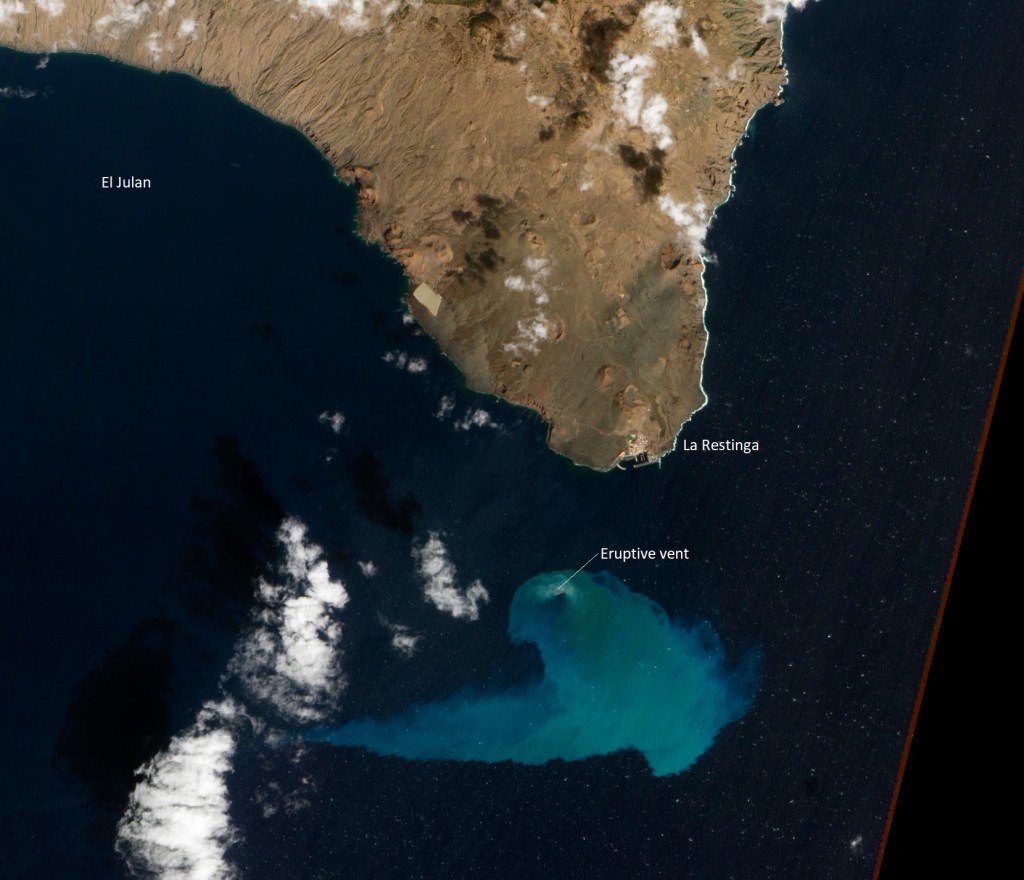
Fig 3: Stain from the submarine eruption south of the island. Image cropped from NASA Earth Observatory EOSDIS on 10 February 2012. Source: El Hierro Submarine Eruption (nasa.gov). “El Julan” and the “Eruptive vent” added by the autho
In 2011 a submarine flank eruption commenced, preceded by an intense seismic swarm. The submarine cone has been named Tagoro, from the Guanche language for meeting place or circular enclosure of stones.
Build up to the eruption
Before the eruption, El Hierro had been quiet since a seismic episode in 1793, which may or may not have been connected to an eruption. In the absence of eye-witness accounts then, it has been suggested that there was an eruption of Lomo Negro volcano, a submarine eruption or a magma intrusion.
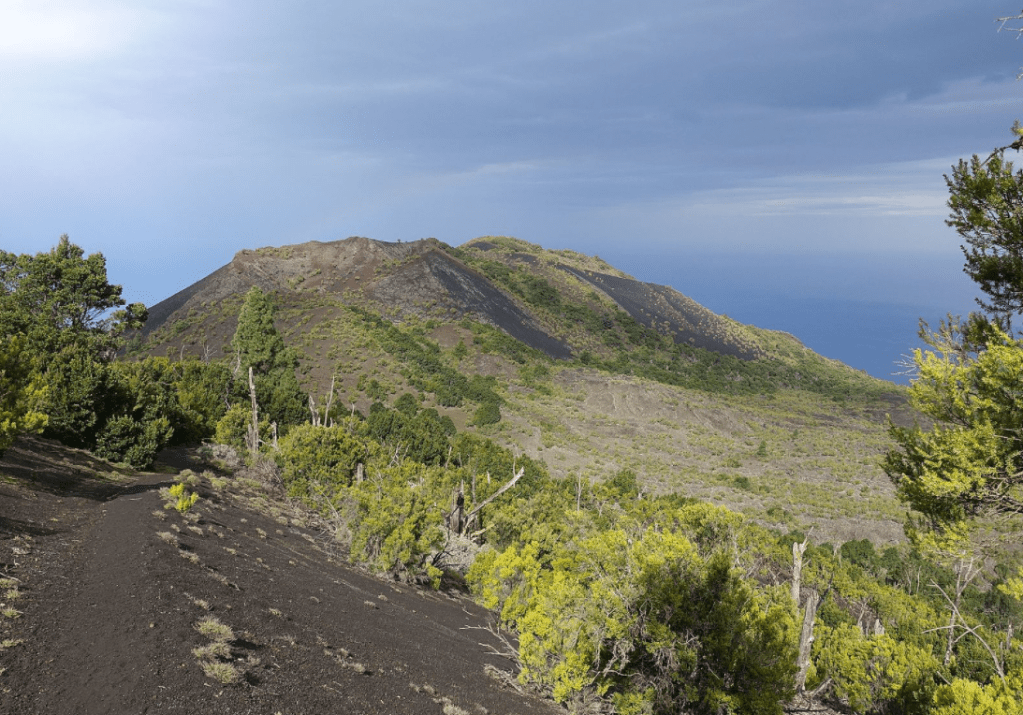
Fig 4: Crater of Tanganasoga. Image cropped from one by Areuland, 5th January 2017. published under CC BY-SA 4.0. Source: Wikipedia
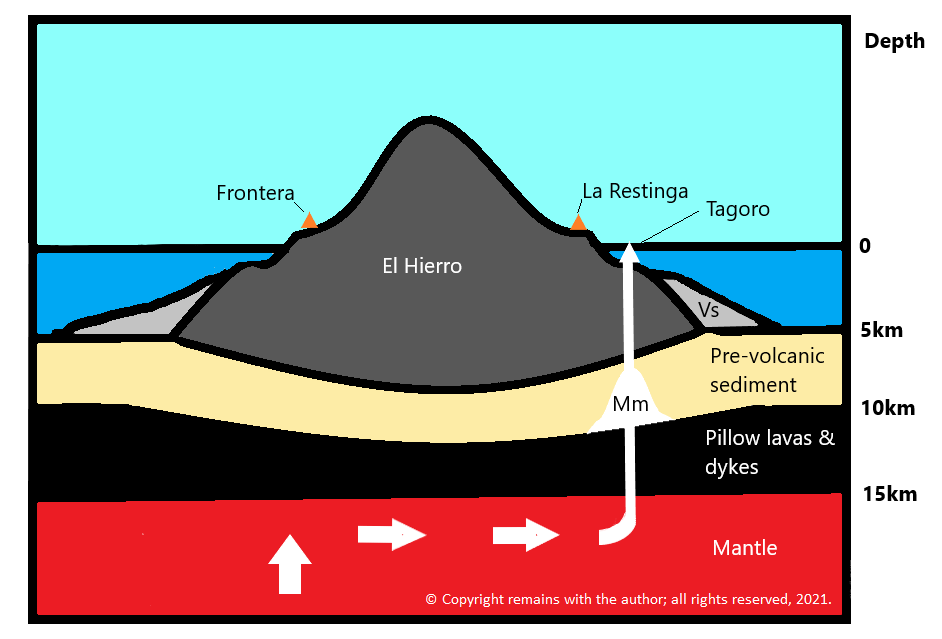
In July 2011, a seismic swarm started under El Golfo at a depth of 20-25km. Seismicity then ascended to 11±3km and headed southward across the island, after which it ascended to 3km between 8-9 October prior to the eruption on 10 October 2011. A 4.4M earthquake at a depth of 10km 1.5km south of La Restinga preceded the eruption. Magma had risen under Tanganasoga, the main volcano on El Hierro, to migrate south towards La Restinga.
Basanite fractionation and magma replenishment may have occurred during these seismic swarms while magma was being injected into the lower crust.
The eruption
The eruption occurred in phases.The lavas in the first phase were evolved basanites. The second phase was more primitive lava with 8-9 wt% MgO.
A harmonic tremor started on 10 October 2011 between 04:15 and 04:20 and is thought to indicate the start of the eruption. Magma had risen from the base of the ocean crust to the vent in c. 30 hours. Areas of discoloured, sulphurous-smelling water and dead fish were seen off the coast of La Restinga. Vigorous bubbling in the sea resembling a jacuzzi was observed above the vent, caused by gas emissions and heat from the vent; bubbling reached several metres high on occasion.
On 15 October 2011, lava bombs were observed. These comprised white to grey pumice encased in black basanite lava. Basanites are typical of the western Canary Islands. A small amount of U-depleted rhyolite was found in the lava bombs, though to have originated from differentiated trachyte incorporating quartz-rich sediment during melting when mobilised by the basanite. The boundary between old oceanic crust, continental crust and volcanic island may act as a magma trap where sediments can be assimilated. A few days later basanite lava balloons were emitted.
The second phase of the eruption started in November 2011 with seismicity at depths of 10-15km and a decrease in tremor intensity. This correlated with the eruption of more primitive lavas.
During November 2011, the eruption was confirmed as Surtseyan. Several plumes of material aligned N-S were visible from the air, confirming a fissure eruption. Tanganasoga experienced rapid inflation and released CO2. On 24th November a sulphur smell was reported in El Golfo. On 4th December 2011, vigorous phreatic bubbling (“the jacuzzi”) was observed. In December 2011, there was a temporary lull: the harmonic tremor and seismicity decreased.
The eruption picked up again in January 2012 with increased seismicity, a larger area of eruption and pumice clasts. In late February 2012, seismic activity, deformation and gas emissions decreased. The eruption was declared over in March 2012.
Tagoro’s cone was found to be 85m below sea level in April 2012. The eruption has been classified as a VEI 2.
Post eruption
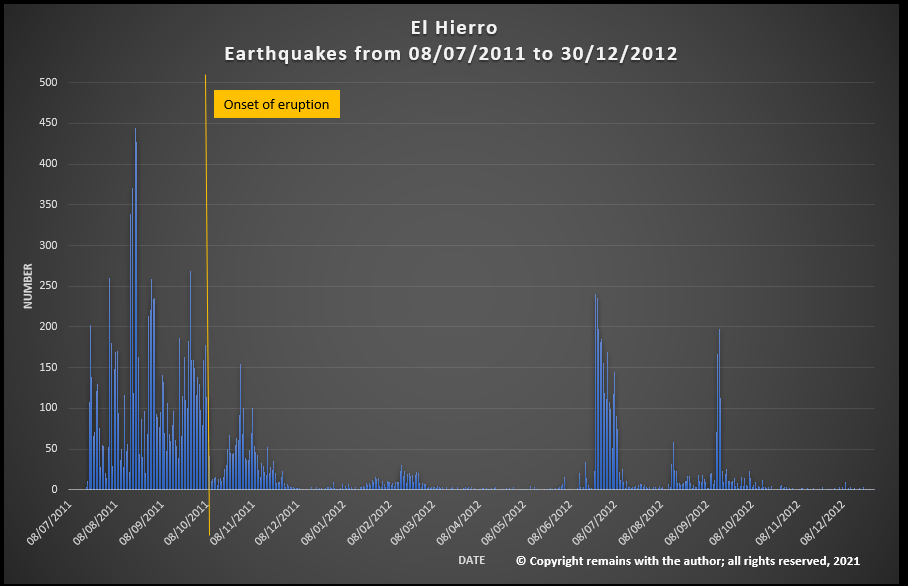
Magma movements were detected from seismic swarms. In June 2012,accompanied by rapid inflation, magma moved south-westward towards El Julan-La Dehesa, northwest of the submarine vent. Earthquakes picked up again in September 2012 indicating magma movement under Tanganasoga.
The last reported seismicity was in March 2013 when another swarm occurred near the NW tip of the island, initially at 20km depth, migrating westward at a depth of 12-15km. The swarm was accompanied by inflation and CO2 emissions.
Plotting Seismicity
We have downloaded the earthquake data from IGN’s publicly available database and plotted the earthquake swarms for the period July 2011 to December 2012. The results are shown in the video below.
Only time, and a lot of work by the various scientists studying the eruption on La Palma, will tell how many similarities are shared between the two eruptions.
28 February 2021 (updated 2 March 2021 with the addition of earthquake plots showing rifting / dike formation)
Good Evening!
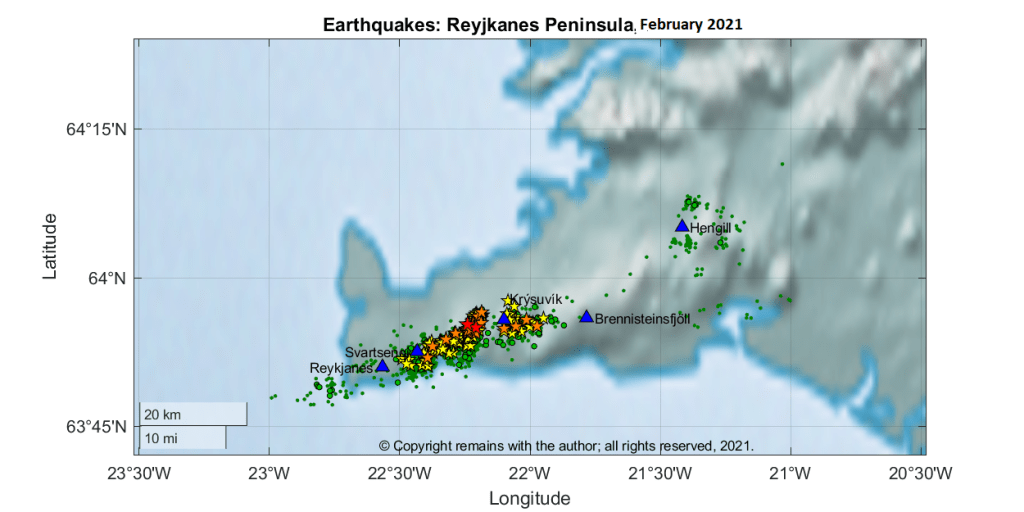
A large earthquake swarm started on 24 February 2021 on the Reykjanes Peninsula in the vicinity of the Krýsuvík volcanic system between Kleifarvatn and Svartsengi. At the time of writing the swarm is still ongoing with over 7,200 earthquakes record by Iceland’s SIL system. Three earthquakes of 5.0M or more have been recorded: 5.7M and 5.0M on 24 February and a 5.2 on 27 February 2021.
The alert level for the Krýsuvík volcanic system has been raised to yellow following sightings of steam jets in geothermal areas in the region after the 5.7M and 5.0M.
The Icelandic Met Office have attributed this swarm to the recent re-awakening of volcano-tectonic activity on the Peninsula.
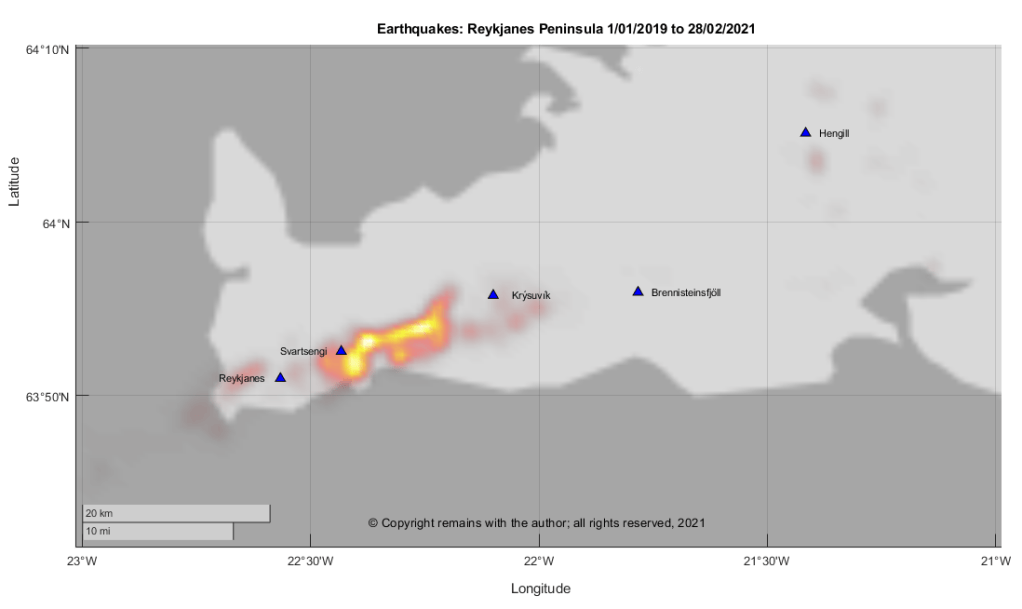
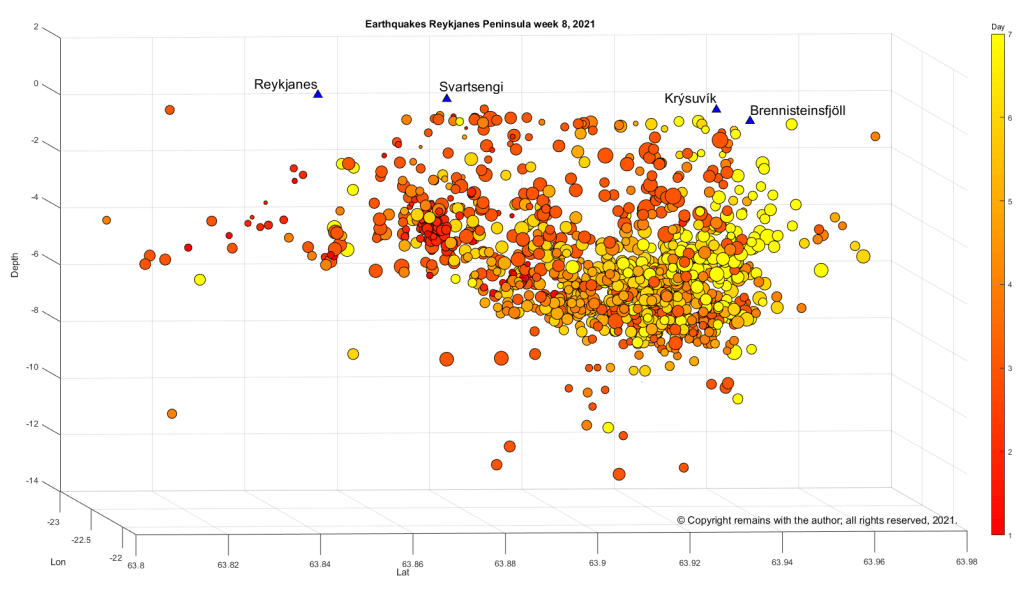
We downloaded the confirmed earthquakes from IMO’s site to take a look. We plotted earthquake density for Week 8, 2021, earthquake locations for February 2021 and earthquakes by month from January 2009 to February 2021.
From our plots we can see the awakening of the volcano-tectonic activity with the upkick in number of earthquakes from December 2019. The current swarm is part of this activity.
At the time of writing, it is not possible to predict whether or not this activity will result in a local eruption in the near future. Only time will tell.
Update 1 & 2 /03/2021
Since writing the swarm has continued, with more than 15,000 earthquakes since it began last week.
The Department for Civil Protection has advised on 1 March 2021, that satellite images show deformation in the area has increased more than expected, indicating possible magma inflow.
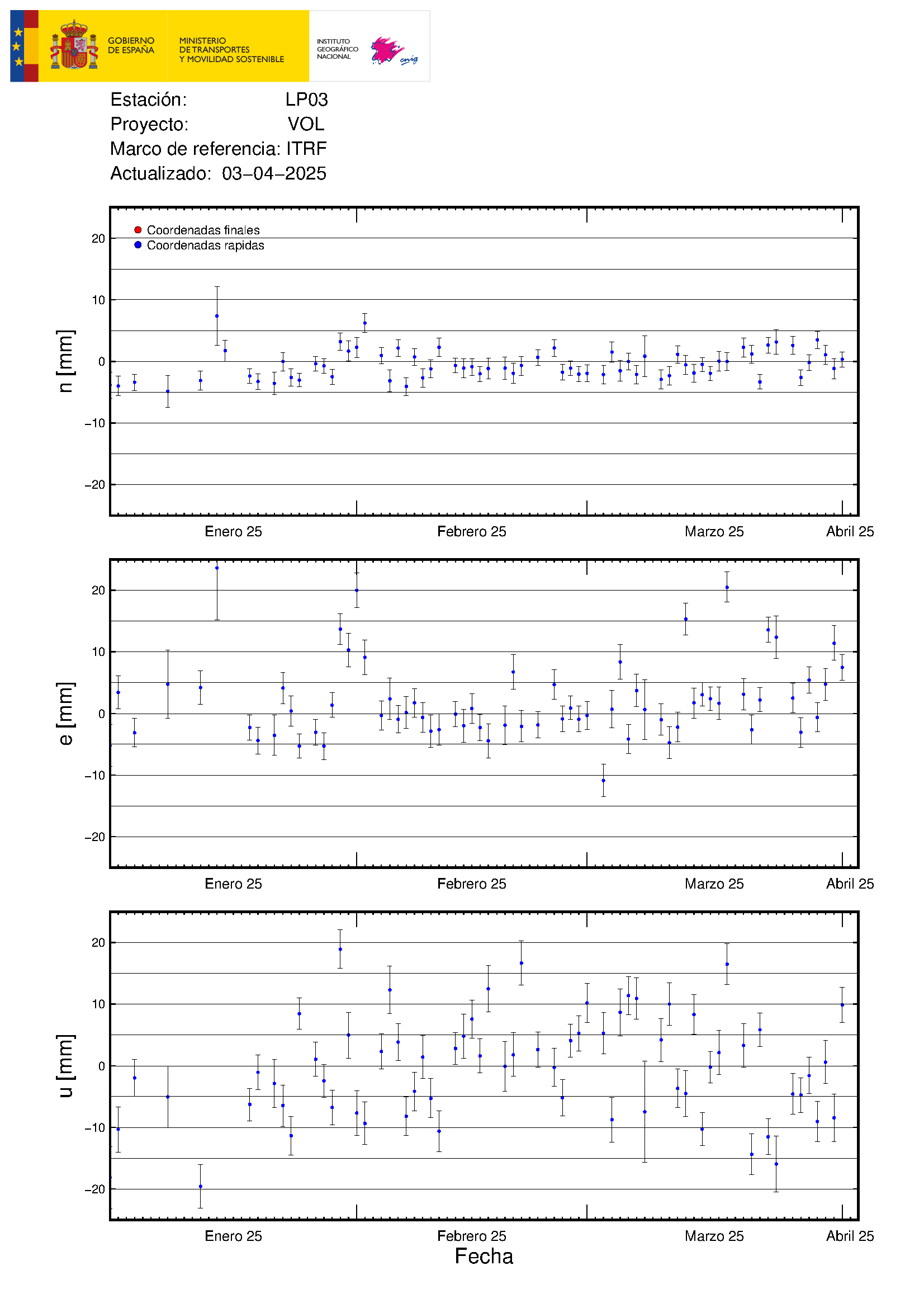
We can see from the local GPS stations that there has been significant uplift near Krýsuvík.
Fig 5: Composite GPS plots for KRI, SENG and THOB.
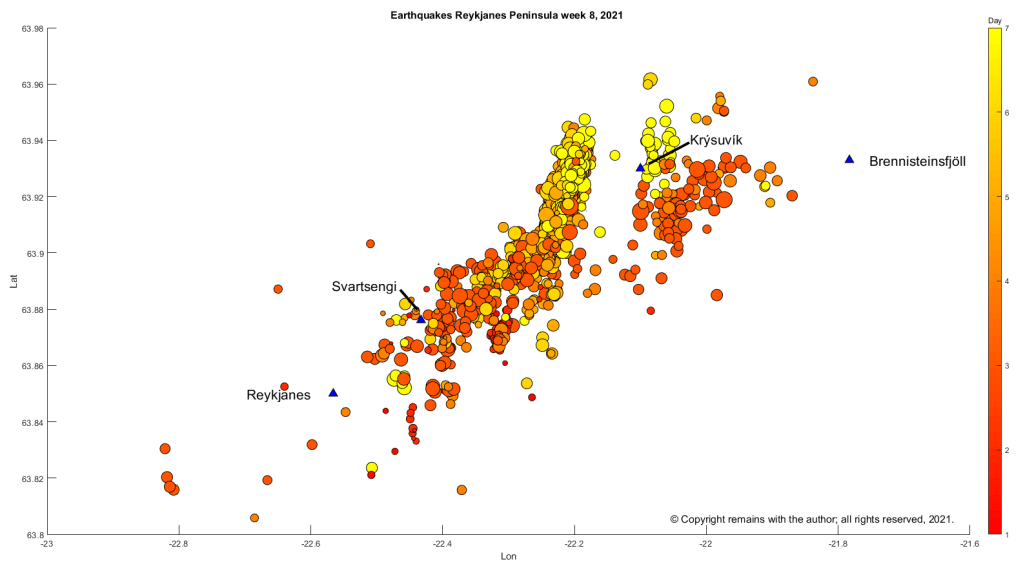
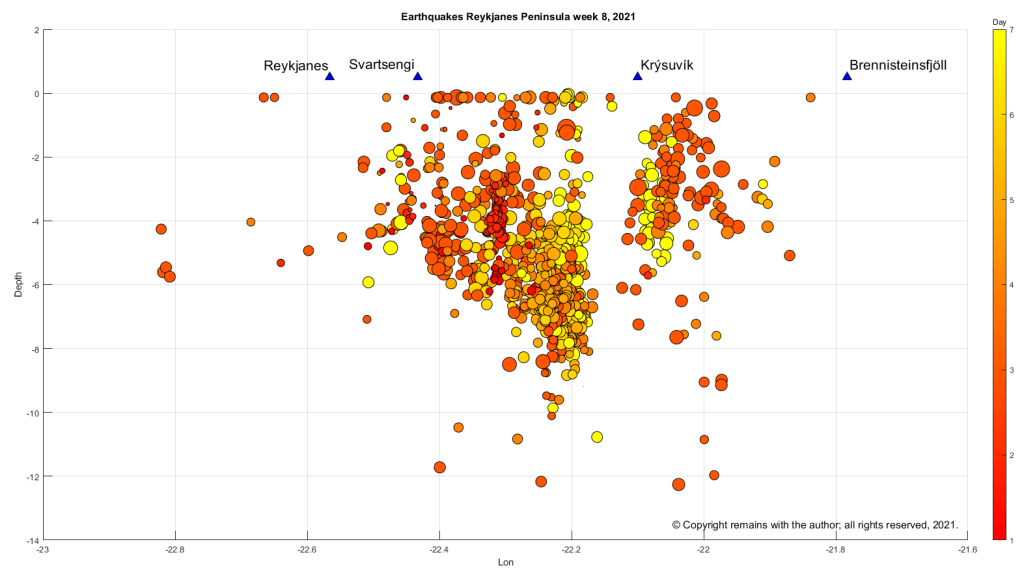
We have also produced scatter plots by day for the swarm in week 8, 2021 which show possible rifting or dike formation.
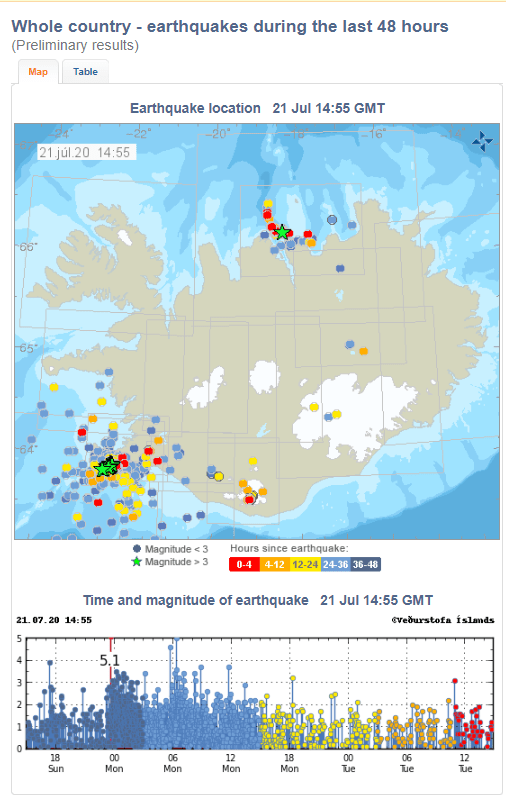
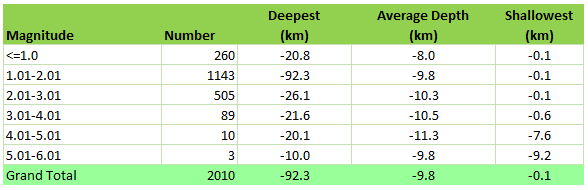
A large earthquake swarm started on the morning of 19 July at around 1:30 am at Fagradalsfjall on the Reykjanes Peninsula. The largest earthquake had a magnitude of 5.1M. At the time of writing, there had been 1,635 earthquakes in the last 48 hours recorded on IMO’s website (note that not all of these have been confirmed). IMO’s map and breakdown of the swarm are shown below:
Fig 1: Map of earthquakes in Iceland over the past 48 hours. Source: IMO
Close up of the Reykjanes Peninsula:
Fig 2: Map of earthquakes in the Reykjanes Peninsula over the past 48 hours. Source: IMO
Magnitude
Number
< 1.0
720
1.0-2.0
723
2.0 -3.0
162
>3.0
30
Fig 3: Breakdown of earthquakes by magnitude
This swarm is occurring on the east side of the swarms on the Reykjanes Peninsula which started late last year. IMO have reported that these swarms (still ongoing) are associated with multiple magma intrusions. The aviation code for the area is still green (IMO). IMO are in the process of evaluating the Fagradalsfjall swarm.
The swarm at the Tjörnes Fracture Zone is still ongoing.
The eagle-eyed amongst you will note that there is some seismic activity at Katla. Whether this will result in anything is anyone’s guess at the moment.
We have not yet updated our earthquake data-set for the current swarm. We will wait until IMO has had a chance to confirm more earthquakes
Update 24 July 2020
The swarm at Reykjanes is now less intense. In the meantime, Katla produced a shallow 3.0 M. IMO have remarked that earthquakes in the summer at Katla are not uncommon.
From memory, Katla was seismically active before the intense swarms started in August 2014 at Barðarbunga in the run up to the eruption at Holuhraun. This may have been a coincidence.
Fig 4: Map of earthquakes in Iceland over the past 48 hours. Source: IMO
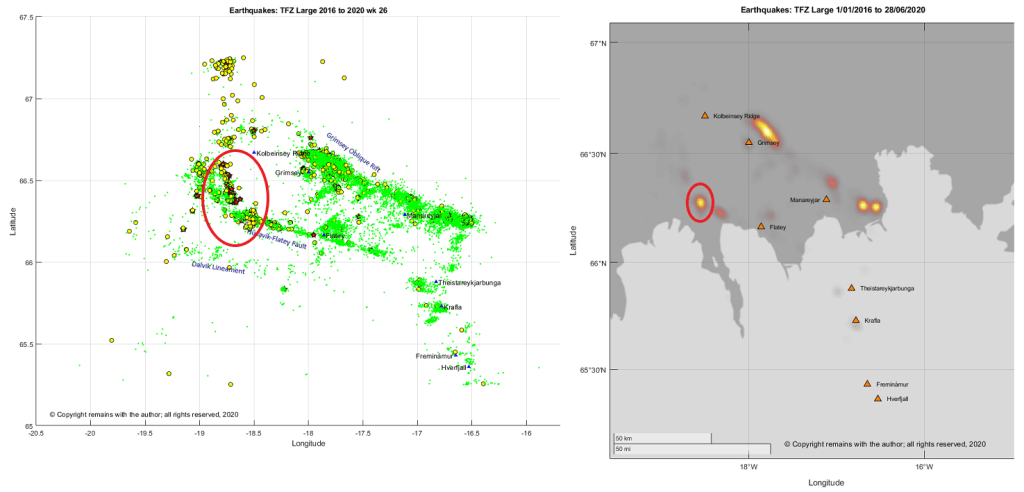
A large earthquake swarm started in Iceland in the Tjörnes Fracture Zone (TFZ) on 19 June 2020, still ongoing at the time of writing. The Civil Protection Authority, Iceland, has declared a state of uncertainty; the TFZ is capable of producing large destructive earthquakes.
The Icelandic Meteorological Office (IMO) has reported that over 9,000 earthquakes have been detected by their SIL earthquake monitoring system. The swarm includes three earthquakes over 5.0: on 20/06/2020 a 5.6 and a 5.4, both 20 km north east of Siglufjörður; and, on 21/06/2020, a 5.8 30 km north, north east of Siglufjörður. The day before the swarm started there was a small earthquake with a depth of 92.3 km, which is unusually deep for the area.
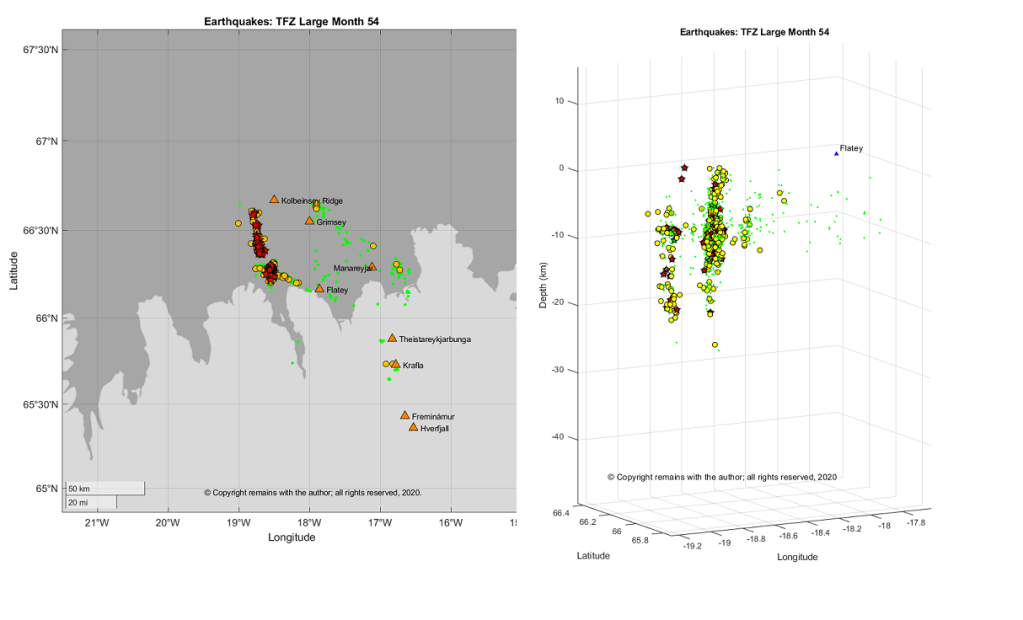
IMO is in the process of manually confirming the earthquakes – a mammoth task! We have updated our earthquake data set up to 28 June 2020 based on the earthquakes confirmed so far in order to take a look at the swarm. In the area, 65.25°N, 21.5°W to 67.25°N, 15.0°W, 2,010 earthquakes from 1 June 2020 to 28 June 2020 were available to download.
Our plot for month 54 (1 June 2020 to 28 June 2020) shows that the swarm is occurring on the western end of the TFZ, near the junction of the Eyjafjarðaráll Rift and the Húsavík-Flatey Fault.
Prior to this swarm, most activity in our data set from 1 January 2016 had been on the Grímsey Oblique Rift and Húsavík-Flatey Fault, with a large swarm occurring to the north west of Grímsey in February 2018 (see our earlier post). The current swarm appears to be the western end of the system catching up.
This swarm is, however, relatively deep for oceanic crust. Whether or not there is any associated volcanic or geothermal activity remains to be seen.
The swarm on the Reykjanes Peninsular that started in late 2019 is still ongoing, albeit at a reduced rate. Are the two swarms linked? The obvious answer is yes – they are both on transform fault systems which accommodate the spreading from the Mid Atlantic Ridge as it crosses Iceland. But is there more to it? Possibly, the crust could be fracturing to accommodate other activity in Iceland – e.g. uplift from the mantle plume. If yes, we may see some more activity e.g. in the vicinity of the Vatnajökull Icecap in the next few months. But we’ll have to wait until the real experts opine.
For updates, please consult IMO.
The Armchair Volcanologist
29 June 2020.
Source for earthquake data: Icelandic Meteorological Office (IMO): https://en.vedur.is
The earthquake swarm which started in December 2019 is continuing, let’s have a quick update on the stats.
Statistics
There have been 19,675 earthquakes in the Reykjanes Peninsula area 64.4°N, 23.0°W to 63.7°N, 21.0°W for the period 1 Jan 2016 to 14 June 2020, of which 14,258 (72%) have occurred in the last six months, most associated with the swarm near Svartsengi.
The geodensity plots for months 48 (December 2019) onwards (Figs 3.1 and 3.2) show that the most intense action started to the east of Mt Thorbjörn and has migrated west to Svartsengi and beyond.
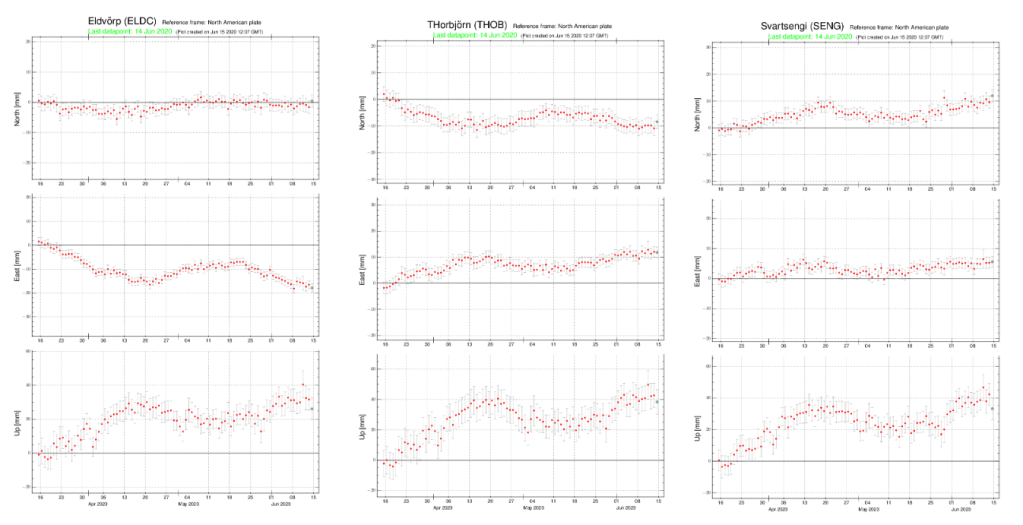
IMO has confirmed that uplift has resumed in the vicinity of Mount Þorbjörn. Ground deformation is clearly visible on the GPS plots.
Fig 4:Uplift in the vicinity of Mt Þorbjörn as shown in recent GPS plots published by IMO: GPS Þorbjörn. THOB moved south eastwards, SENG moved north eastwards and ELDC moved westward; all showed uplift.
Summary
We are still looking at an unusually large swarm, accompanied by continued uplift in the vicinity of Mt Þorbjörn.
At the time of writing, there has been no change in the uncertainty phase declared by Icelandic Civil Protection .
The Armchair Volcanologist
15 June 2020
Sources:
Raw earthquake data and GPS plots downloaded from the Icelandic Met Office: https://en.vedur.is












 An Armchair Volcanologist